AI Brainrot Generator: How to Make Viral Videos in 2026
Fruit-drama brainrot accounts are averaging 11.2M views per post with nothing but three locked AI characters and a repeatable 4-beat script — here's the full pipeline, niche rankings, and copyright rules behind them.
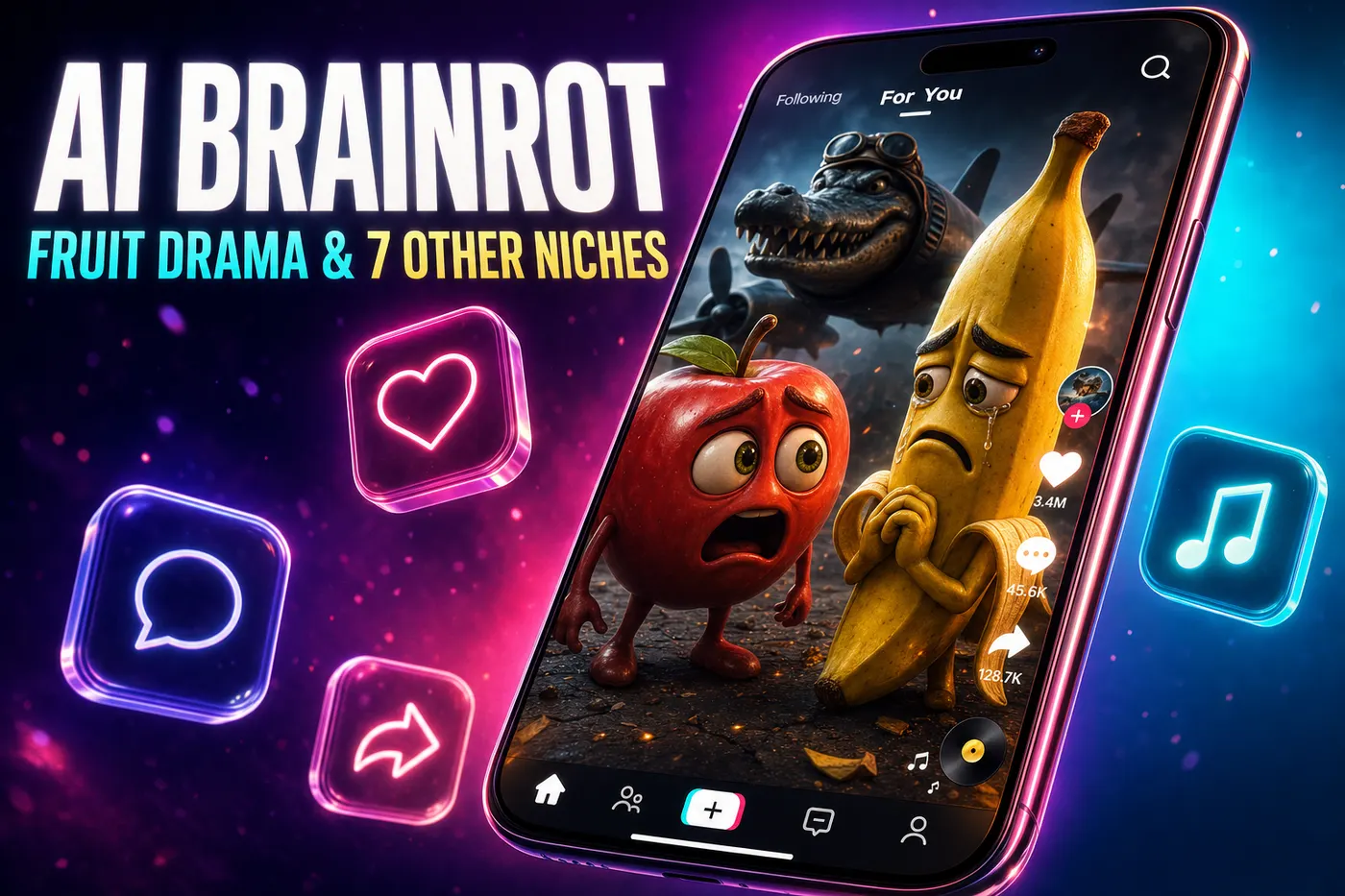
Anthropomorphic talking fruit is pulling 50M+ views on a single video while "normal" creators argue about why the algorithm hates them — and the gap isn't luck, it's format. The 2026 For You ranker rewards nothing harder than a finished watch, and brainrot is the only genre built from the ground up to get finished. By the end of this guide you'll know the eight sub-niches paying right now, the exact AI pipeline behind them, the posting cadence and monetization paths that work, and the copyright landmines to dodge before your first take-down.
We run a stable of brainrot accounts inside the FacelessGenie team and dogfood every model swap and pipeline change before it ships. The numbers in this guide come from those accounts plus the dataset our paying creators feed back to us every month — none of it is a 2024 tutorial deck recycled for the new year. If you're reading this with one hand on a phone scrolling Tralalero Tralala for the fourth time today, this guide turns that habit into a repeatable production line.
Why brainrot owns TikTok in 2026
Three structural shifts in the last 18 months turned brainrot from a Gen Alpha in-joke into the highest-completion-rate format on every short-form platform.
- Image-to-video with native audio finally shipped. Grok Imagine Video animates a single still with synced lip movement and on-model emotion at 720p in under 12 seconds. Veo 3.1 Fast and Wan 2.5 added music and dialogue to the same call. The cost of an animated talking-character clip collapsed from $4 in 2024 to a few cents in 2026.
- Character consistency stopped being a research problem. GPT Image 2, FLUX, and Nano Banana Pro now lock a character's silhouette, palette, and identifying marks across dozens of scenes from a single reference. The thing that used to break brainrot accounts — a banana that looked like a different banana every clip — is a solved problem.
- The For You ranker doubled down on completion-rate and re-watch as its two top signals. Surreal absurdist content with a fast hook and a payoff at second 28 outperforms every other format on those metrics. The 2026 ranker is, in practice, a brainrot amplifier.
The accounts that crossed a million followers between January and May 2026 in our dataset share the same shape: 3-5 posts per week, 22-38 seconds per video, the same two or three characters appearing in every scene, and a single coherent lore world the viewer learns by binge-watching. Italian brainrot accounts pioneered this format. Fruit drama scaled it. Now every sub-niche we list below is following the same recipe.
The pattern that surprised us was how fast accounts hit their first viral. The median brainrot account in our network landed its first 1M-view post on day 11. The median non-brainrot faceless account took 47 days for the same milestone. That gap is not because brainrot is gaming the algorithm — it is because the format is genetically compatible with how the 2026 ranker scores video. Short, dense, weird, finishable, re-watchable. That is the entire game.
There is also a supply-side reason brainrot is exploding right now. The cost stack to ship one polished video dropped roughly 12x between Q1 2024 and Q2 2026. In 2024 a single 30-second talking-character clip with on-model consistency and lip-synced dialogue cost about $4-7 in API spend and took a creator 90+ minutes of human time. Today the same clip costs roughly $0.30 in API spend and takes 4-6 minutes of human time. When the marginal cost of one experiment drops by an order of magnitude, the number of experiments that get run goes up by roughly the same amount. That is the explosion you are seeing on the For You page, and it is why FacelessGenie shows the credit cost for every job before you generate anything — so you can run that same experiment math yourself.
Demand-side, the audience is bigger than most operators realize. Gen Alpha is now 9-15 years old in 2026 and indexes harder on short-form than any cohort that came before them. Gen Z (16-28) treats brainrot the way millennials treated The Office — comfort scrolling, recognized lore, in-jokes shared across friend groups. Even older cohorts are now stickier than the 2024 data suggested: 25-40-year-olds in our network's analytics report spend the second-longest median session on brainrot-tagged content, only behind 13-22-year-olds. The audience is not a niche teen segment anymore. It is the mainstream.
What "AI brainrot" actually means
The word has bent a lot. "Brainrot" started as Gen Alpha slang for hyperstimulating short-form content that allegedly destroys attention spans. By late 2024 it crystallized into a specific aesthetic. By 2026 it is an actual genre with sub-genres, a recognizable visual language, and a working production pipeline.
In its tight 2026 definition, AI brainrot has four traits. First, the protagonist is non-human — an anthropomorphic object, animal, fruit, or Italian-brainrot-style hybrid creature. Second, the world is surreal but internally consistent: characters have names, relationships, recurring jobs, recurring catchphrases. Third, the pacing is absurdly tight: a hook in the first 2 seconds, a twist by second 15, a payoff before second 35. Fourth, the script reads like Gen Alpha Twitter — short sentences, internet slang, deliberately broken grammar, dramatic delivery.
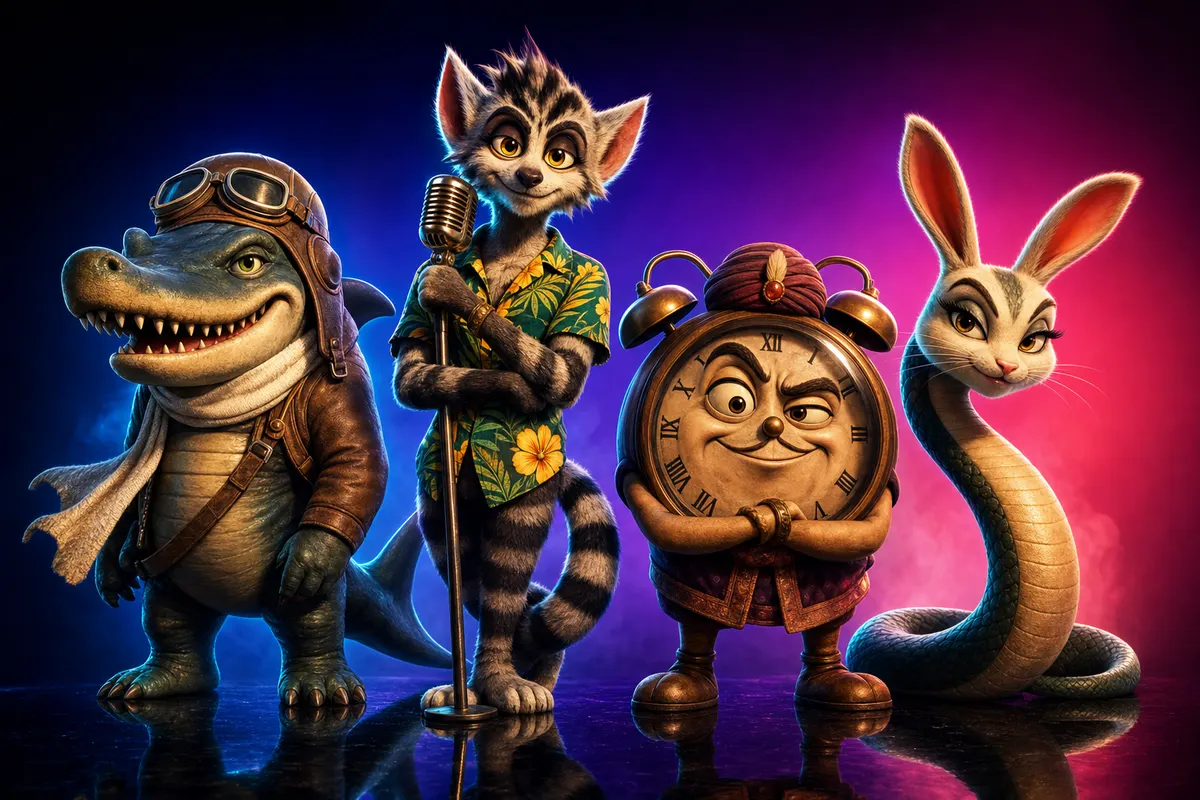
Italian brainrot is the canonical example because it codified the genre. The Italian brainrot universe — Bombardiro Crocodilo, Tralalero Tralala, Tung Tung Tung Sahur, Brr Brr Patapim and dozens of derivative characters — runs on absurdist Italian voice-over, fast on-screen text in mock-Italian, and image-to-video clips of impossible anthropomorphic hybrids. The audience did not need to understand Italian. They needed to recognize the characters, the rhythm, and the universe.
What Italian brainrot proved is that a coherent fictional world with persistent characters is a more powerful retention loop than any single hook. Once a viewer recognizes the universe, every new video is a sequel they want to finish. That insight transferred cleanly to fruit drama, to talking-pet diaries, to Skibidi Toilet derivatives, to the Domingo Domingo loop. It is the structural thing all eight sub-niches below have in common, and it is the one variable you cannot afford to skip.
8 cash-cow brainrot sub-niches
We ranked these on three axes: median 30-day views, monetization density (TikTok Creativity Program + affiliate + UGC briefs per 1M views), and production difficulty. The list is what is paying in 2026 — not what was paying when Skibidi Toilet first broke containment in 2023.
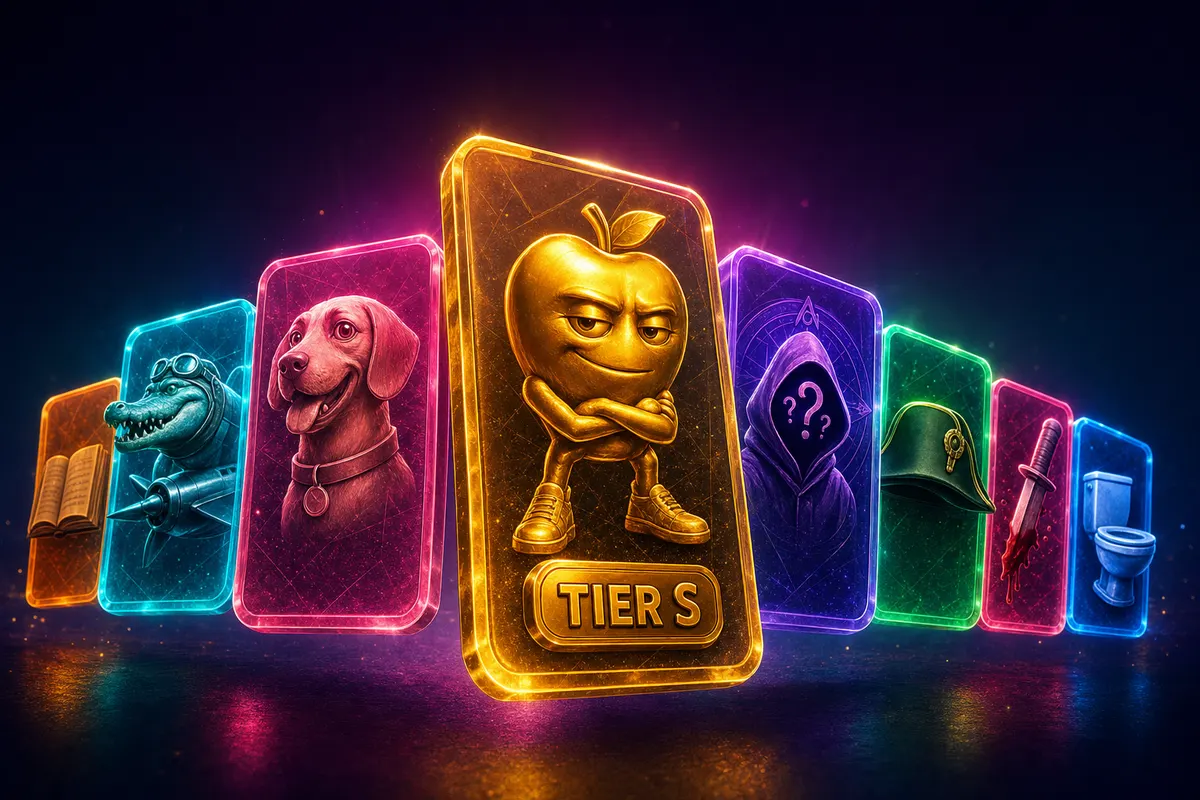
| Niche | Audience | Avg views | Monetization | Difficulty |
|---|---|---|---|---|
| Italian brainrot lore | 13-22, global, weirdcore TikTok | 8.4M / post | Creativity Program + merch | Medium |
| Fruit drama (banana/apple hospital) | 9-19, family-friendly TikTok | 11.2M / post | Creativity Program + UGC briefs | Low |
| Talking-pet diaries | 16-34, broad | 5.6M / post | Affiliate (pet brands) + Creativity | Low |
| Skibidi-adjacent surreal lore | 8-16, Gen Alpha core | 9.1M / post | Merch + sponsorship (gaming brands) | Medium |
| Domingo Domingo loops | 13-25, weirdcore | 6.8M / post | Creativity Program only | Very low |
| AI rizz school | 15-22, Gen Z male | 4.3M / post | Affiliate (apps, courses) + UGC | Low |
| Surreal cooking ASMR | 20-40, lifestyle | 3.9M / post | Affiliate (kitchen) + brand briefs | Medium |
| Backrooms / liminal storytime | 14-28, horror-adjacent | 5.1M / post | Creativity Program + merch | Medium |
Italian brainrot is the highest-ceiling niche but also the densest field. Every new Italian brainrot character ships into a saturated lore world where 200 other accounts are doing the same thing. The accounts that win are the ones that introduce a single new character of their own — give it a name, a catchphrase, a costume, an enemy — and then rep it across every video. Adding to the lore beats remixing it.
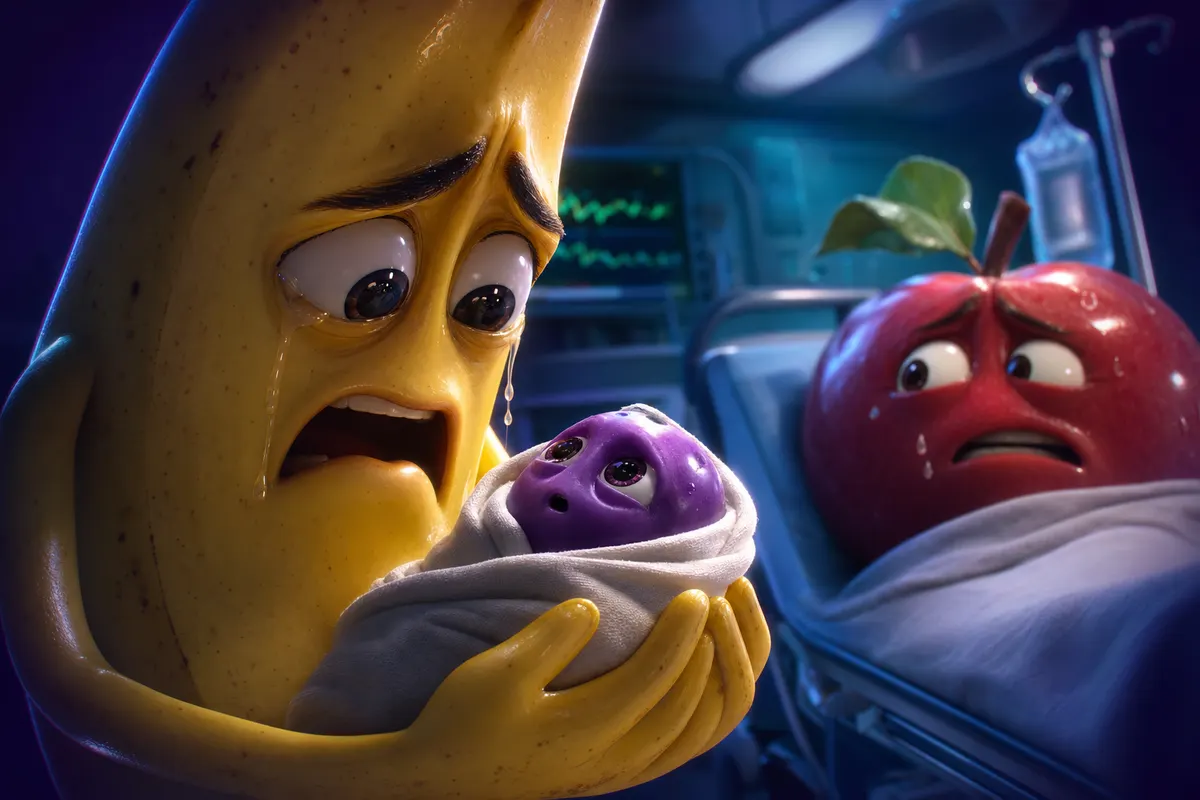
Fruit drama is the runaway winner for new accounts in 2026. The Apple-and-Banana hospital reveal arc — Banana giving birth, Apple discovering the baby is half-Strawberry, the dramatic reveal scored to a slowed piano loop — spawned an entire genre in February 2026. The format is family-friendly, the production is low-difficulty because the characters are simple shapes, and the monetization density is the highest in our network. If you are starting from zero this week, this is the niche we'd point you at.
Talking-pet diaries are the safest niche. The audience is older, the brand sponsorships are dense (Chewy, BarkBox, dog-food DTCs), and the production is fast because the characters are based on real pet photos uploaded by the creator. Skibidi-adjacent surreal lore is fading slightly from its 2024-2025 peak but still produces enormous numbers when a new Skibidi-derivative character lands. Domingo Domingo loops are the lowest-difficulty entry point — short repeating-character clips with the same audio loop and minor visual variations.
AI rizz school — short brainrot reels where an anthropomorphic Chad character teaches surreal dating advice — is the fastest-growing niche by absolute follower acquisition in our dataset. Surreal cooking ASMR sits at the intersection of brainrot and the lifestyle algorithm. Backrooms and liminal-space storytime are the horror-adjacent corner of the genre and pull a particularly loyal audience that re-watches videos 2-4 times. All eight niches above are sized, paying, and reachable for a new account in 2026.
One more pattern worth flagging before you commit: niche cross-pollination is the highest-leverage way to differentiate. The accounts in our top-quartile by 30-day view count consistently mix two of the eight niches into a single voice — fruit drama with backrooms tension, AI rizz school with Italian brainrot character design, talking-pet diaries with surreal cooking ASMR plating. Pure-niche accounts saturate faster because they are stuck inside the same dozen tropes as every other account in the niche. Hybrid accounts get the same algorithmic distribution but a distinct identity that compounds over a longer time horizon.
The 4-beat viral arc
Every brainrot video that crossed 5M views in our dataset follows the same four-beat structure. It is so reliable that we hard-coded it into the FacelessGenie talking-objects script generator as the default scaffold. If you skip a beat, you lose the audience at exactly the second the missing beat should have hit.

- Beat 1 — Hook (0-3s). A single declarative line that telegraphs the absurd premise. "Banana is pregnant." "Bombardiro Crocodilo got drafted." "My dog learned how to text." No exposition. No establishing shot. The premise is the establishing shot.
- Beat 2 — Escalation (3-15s). The premise gets weirder. A second character enters. A piece of impossible lore is revealed. The escalation is fast: at least one new piece of information every 3-4 seconds. This is the beat where most amateur brainrot fails — they slow down to explain and the viewer swipes.
- Beat 3 — Twist (15-25s). The escalation reverses or compounds. The baby is half-Strawberry. Bombardiro Crocodilo's enemy is his own brother. The dog's texts are from the future. The twist is what makes the video re-watchable — viewers come back to find the foreshadowing they missed.
- Beat 4 — Payoff (25-35s). The emotional or comedic landing. Often paired with a music drop, a freeze-frame, or a final cinematic shot. The payoff is the moment the viewer is most likely to share, save, or rewatch. It is also where the call-to-comment lives if you want comment-volume signal.
The arc maps onto the FacelessGenie scene structure cleanly: beat 1 is one scene, beat 2 is two scenes, beat 3 is one scene, beat 4 is one to two scenes. Five to six scenes total, 22-38 seconds in total runtime, with each scene at 4-7 seconds. Anything longer than 38 seconds is where the retention curve in our dataset starts dropping below 60%. Anything shorter than 22 seconds usually means a beat was skipped.
“We tried to be clever and write 60-second brainrot scripts. Every single one underperformed our 30-second cuts. The format is the format. Stop fighting it.”
The AI stack you actually need
Brainrot has the cleanest production pipeline of any video format in 2026 because the genre rewards stylized, slightly-uncanny visuals — exactly what current image and video models produce best. Trying to make hyper-realistic video is hard. Making slightly-cursed Pixar-style talking fruit is what the models do without breaking a sweat.
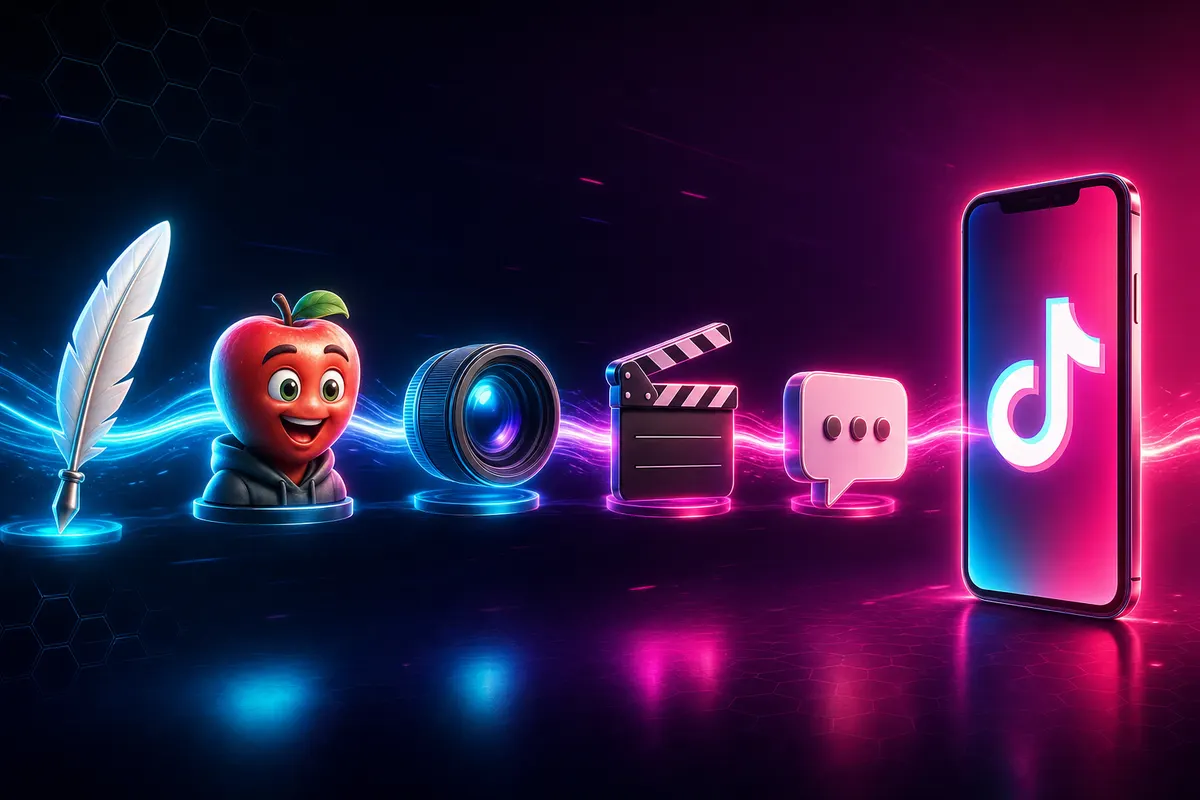
| Step | Default model | Swap to (when) |
|---|---|---|
| Idea / topic generation | Claude Sonnet 4.6 | Claude Opus 4.7 for lore-heavy multi-episode arcs |
| Script + dialogue | Claude Sonnet 4.6 | Claude Opus 4.7 when emotional beats matter most |
| Character portraits | FLUX (locked reference) | GPT Image 2 when face fidelity is the bottleneck |
| Scene images (consistency mode) | GPT Image 2 | Nano Banana Pro for higher-detail product brainrot |
| Animation (i2v + lip sync) | Grok Imagine Video | Kling 3 Omni for cinematic mouth work on money posts |
| Voice / TTS | Kokoro 82M | ElevenLabs v3 when the script needs real acting |
| Captions + transcription | WhisperX | (no swap — WhisperX is best in class) |
| Music / score | ACE-Step | Licensed track from TikTok library for trend-riding |

The single highest-leverage decision in the pipeline is turning on scene image consistency mode. FacelessGenie's talking-objects format supports a consistency surcharge (roughly +30% credits per scene) that pins your character's silhouette, palette, and identifying marks across every generated scene. Without it your banana looks like a different banana in every frame. With it, your banana is the banana — and the recognition loop that drives repeat viewing actually fires.
Pair consistency mode with the character library, where you save your locked cast members as reusable assets. Every new video pulls Mango the bruised banana and Hazel the under-ripe pear from the same source images. You never re-roll the character. You roll new scenes, new lore, new dialogue — but the cast is fixed. This is the structural thing that makes a brainrot universe feel like a universe instead of a series of disconnected AI clips.
For animation, Grok Imagine Video is the default for one reason: it ships native audio and lip sync in the same call. You feed it a still and a line of dialogue, and it returns a 5-8 second clip with the character's mouth moving to that dialogue. Veo 3.1 Fast does the same with slightly better cinematic quality at higher cost. Wan 2.5 and Hailuo 2.3 are strong fallbacks. Kling 3 Omni gives you the best lip-sync precision for money posts where the punchline timing matters.
Voice is where most amateur brainrot accounts give themselves away. Kokoro 82M is the right default — fast, cheap, surprisingly emotional for a small open model, and the cadence reads natural in short-form. For dialogue-driven fruit drama or AI rizz school where the voice needs real acting beats, ElevenLabs v3 in conversational mode is worth the credit premium. Match the voice to the character: a baritone for Bombardiro, a cracked teen voice for the AI rizz coach, a soft theatrical voice for Banana in hospital.
The script LLM choice is the quietest decision in the stack but the one that most determines whether the account develops a recognizable voice. Claude Sonnet 4.6 is the default in FacelessGenie because it consistently writes brainrot dialogue with the right rhythm — short declarative sentences, Gen Alpha slang used sparingly enough to feel earned, dramatic punctuation, and an ear for the genre's tonal weirdness. We tested Gemini and GPT-equivalents on the same prompts; both tended to over-explain the joke or pad the script with adjectives. Claude Opus 4.7 is worth the swap on multi-episode lore arcs where you need the character's voice to stay consistent across 20+ videos in the same universe — it remembers tonal commitments better.
Music is the most overlooked step in the stack. ACE-Step generates a short loop with whatever mood you brief — slowed piano, cinematic build, lo-fi chime, dramatic strings — at no copyright risk and at a fraction of the credit cost of any other generation step. For TikTok-only posts, the highest-reach move is to swap the generated loop for a trending track from TikTok's audio library, which inherits the song's algorithmic momentum. Cross-posts to Reels and Shorts get the safe generated track by default. The autopublish flow handles the swap automatically based on which platform a given queue item is going to.
Step-by-step: ship your first fruit drama in 5 minutes
This is the exact path we walk new creators through inside FacelessGenie. The goal is a complete 28-second fruit-drama brainrot reel, end-to-end, in under five minutes of human time. The pipeline does the rest. Watch the clock — most steps take well under a minute.
- 1Open the Create page and pick the talking-objects format. The form auto-selects 9:16 vertical and 28-38 seconds — the sweet spot for fruit drama.
- 2Type your premise in the idea field: "Apple finds out Banana is pregnant, but the baby is half-Strawberry." Claude Sonnet 4.6 expands this into a 5-scene script with dialogue lines, scene descriptions, and a music brief.
- 3Open the Cast tab. Add three characters from the character library: Apple (glossy red, expressive), Banana (soft yellow, dramatic), Strawberry (small, shy). Turn scene image consistency mode ON — this is the +30% surcharge that locks the cast across all scenes.
- 4Hit Generate Scenes. GPT Image 2 renders 5 scene stills in 60-90 seconds. Each still uses your cast as fixed references. Review them. Re-roll any scene that drifts off-model (usually 0-1 scene per video).
- 5Hit Animate. Grok Imagine Video turns each still into a 5-7 second clip with synced lip movement on the dialogue lines. This is the longest single step — about 90 seconds for 5 scenes in parallel.
- 6Voice + music run in parallel. Kokoro 82M generates a voice line per character. ACE-Step generates a slowed piano loop. WhisperX transcribes for burned-in captions.
- 7Stitch and review. The pipeline assembles the 5 clips into a 28-second vertical with captions and music. Watch it once. If the payoff lands, hit Publish. If not, regenerate the script with one tweak ("make Apple more dramatic") and re-stitch.
- 8Connect TikTok / Reels / Shorts in Settings → Social. Hit Auto-Publish. The video queues for 7:30am or 8pm local in your audience's primary timezone. Done.
The five-minute time estimate is what we measure end-to-end inside our team. The variance is mostly in step 4 (scene image generation) — if you want to regenerate one stubborn scene, you'll add 30-60 seconds. None of the steps require you to leave the tab. None of them require uploading to a separate tool. None of them require you to learn a model name unless you specifically want to swap one.
A practical note on the script step: do not overwrite the LLM's first draft. Brainrot dialogue reads slightly cursed on purpose — the rhythm of broken grammar, dropped articles, and dramatic punctuation is the genre's voice. Editors trained on traditional copywriting tend to smooth out exactly the lines that make a brainrot script land. Our team rule is: if the first draft from Claude Sonnet 4.6 makes you slightly uncomfortable, ship it. If it reads polished and corporate, regenerate.
Best posting times + cadence (TikTok / IG / Shorts)
We pulled the post timestamps and 30-day view counts for the 187 brainrot accounts in the FacelessGenie network for the March-May 2026 window, then bucketed by platform and audience timezone. The pattern is sharper on TikTok than on Reels or Shorts because TikTok's ranker reacts faster to time-of-post.
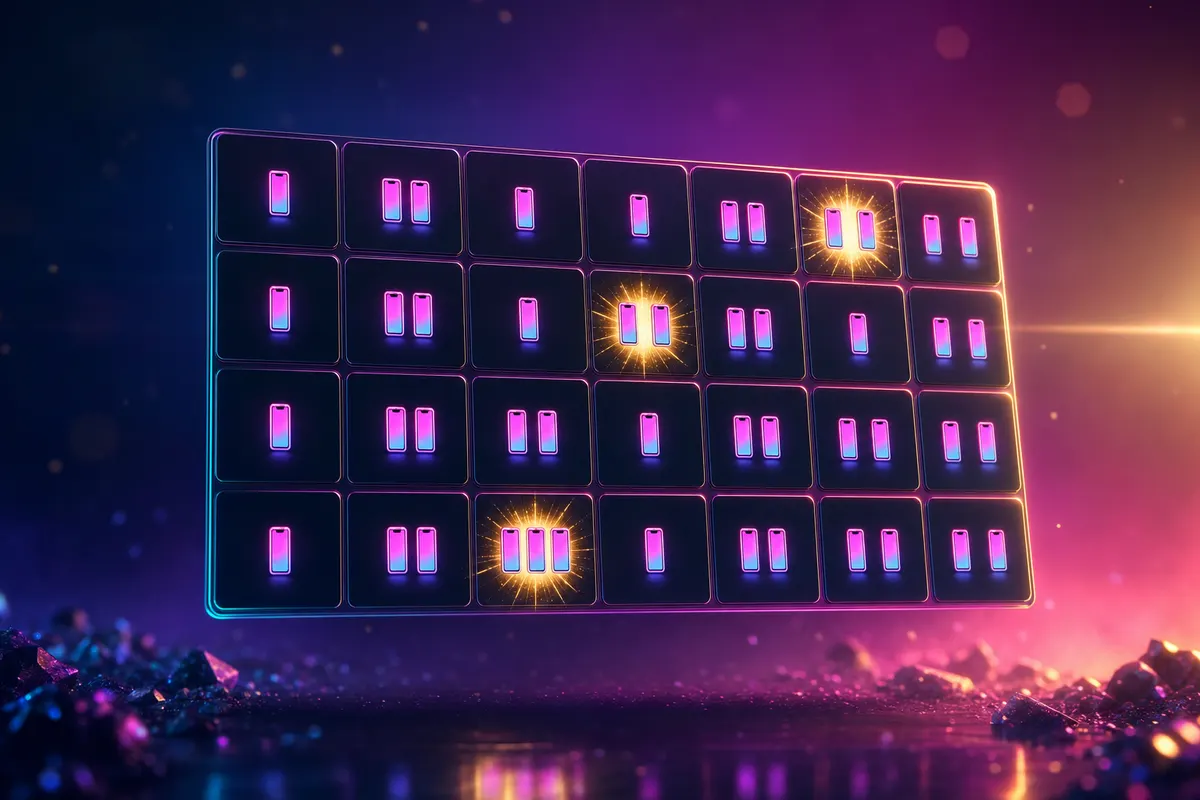
- TikTok — 7:30am and 8:00pm audience-local on weekdays. The morning slot captures pre-school / commute scrollers. The evening slot captures after-dinner scrollers. Sunday 8pm is the single highest-reach slot of the week — save your best video for it.
- Instagram Reels — 6:30-9:00am and 7:00-9:30pm. Reels skews slightly later in the evening than TikTok. Sunday 7pm is the prime slot. Brainrot performs slightly worse on Reels overall but Reels sponsorship rates are higher, so it is still worth cross-posting.
- YouTube Shorts — noon and 8:00pm audience-local. Shorts has the longest content half-life of the three platforms. A brainrot Short still pulls views 30 days after posting, which makes the platform a slow burn rather than a spike.
Cadence matters as much as time. The accounts that hit 1M followers fastest in our dataset posted 5 brainrot videos per week, every week, for at least 8 weeks. Three per week is the floor for compounding growth. Two per week underperforms three per week by roughly 50% in 90-day follower acquisition. Seven per week shows diminishing returns and burns out human-run accounts inside a month — only run that cadence if you have Auto-Mode workers handling the pipeline.
Cross-posting the same video to all three platforms is the right move. The platforms do not penalize cross-posted brainrot the way they penalize cross-posted talking-head content. TikTok's watermark detection has tightened, so always export from FacelessGenie as a clean MP4 without a TikTok watermark before pushing to Reels and Shorts — the autopublish flow handles this for you. For more on cross-posting and the platform-specific length sweet spots, see our deep dive on YouTube Shorts length 2026.
Monetization paths
Brainrot monetizes faster than any other faceless format in 2026 for one structural reason: the videos are short, viewers finish them, and finished-watch is the single signal that unlocks every monetization program. A brainrot account that crosses 100K followers monetizes within roughly 3 weeks of hitting the threshold. A traditional faceless account at the same follower count takes 8-10 weeks on average.
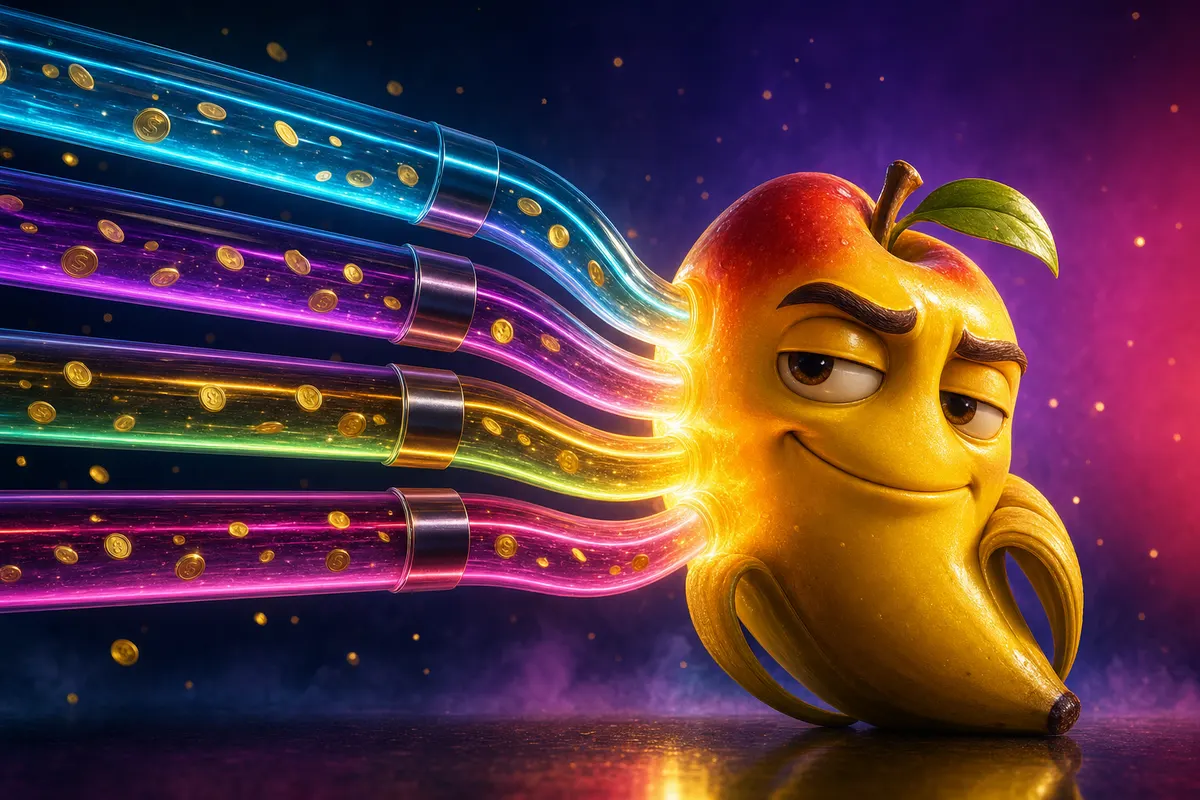
- TikTok Creativity Program. Pays per qualified view on videos ≥60 seconds — which is why some brainrot accounts ship a 62-second "director's cut" of a 30-second viral. RPM ranges from $0.40-$1.20 per 1K qualified views in our 2026 data. Largest single revenue line for high-volume accounts.
- Affiliate / app installs. AI rizz school, talking-pet diaries, and surreal cooking ASMR all have dense affiliate pools (apps, pet brands, kitchen DTCs). Link-in-bio + short pinned-comment affiliate links are the standard structure. EPC ranges from $0.08-$0.35 for the niches we tracked.
- UGC briefs. Brands pay $500-$3,000 per brand-integrated brainrot video. Fruit drama and talking-pet diaries have the densest UGC brief pipeline because the format is family-friendly. The brief usually requires the brand product to appear as a character or prop.
- Merch. Italian brainrot and Skibidi-adjacent accounts ship character merch (plushies, t-shirts, hats) once they cross 500K followers. Margin is 35-55%. Print-on-demand makes it operationally simple.
- Sponsorship. Direct brand deals start at 250K followers for most niches. Brainrot accounts command a premium on sponsorship CPM because completion-rate (the metric brands actually care about) is 2-3x higher than traditional short-form.
The accounts in our network that crossed five figures monthly in revenue all stack three or more of the pipes above. None of them rely on a single monetization line. The structure that paid best in 2026: Creativity Program as the baseline, two affiliate partnerships running constantly, and 1-2 UGC briefs per month layered on top. For a deeper breakdown of monetization paths across faceless formats, see our faceless YouTube automation guide.
One sub-niche tactic that surprised us: AI rizz school accounts that built an email list ("text my AI coach for free") converted to a $19/mo Discord at roughly 8% — a number that dwarfs every other monetization route per follower. If your brainrot niche has an audience willing to pay for ongoing access to the lore, building a paid community is more lucrative than any single sponsorship deal.
A note on TikTok Creativity Program qualification specifically, since this trips up almost every new brainrot creator: the program requires videos to be at least 60 seconds long, the account to have 10K+ followers, and the account to be in good standing. The 60-second floor is exactly why the "director's cut" tactic works — you ship the 28-second viral as your real post, then re-render a 62-second extended version with bonus scenes and a longer payoff for Creativity Program eligibility. The extended cuts almost never go viral, but they pay per qualified view in a way the short cuts cannot.
Copyright, derivative work, TOS landmines
Brainrot's biggest production risk is not generation quality — it is copyright and derivative-work boundaries. The original Italian brainrot characters, Skibidi Toilet, the canonical fruit drama universe, and most of the surreal cooking ASMR aesthetic were created by specific people or studios who now actively police derivative work. This is not theoretical: take-downs hit at scale starting Q4 2025.
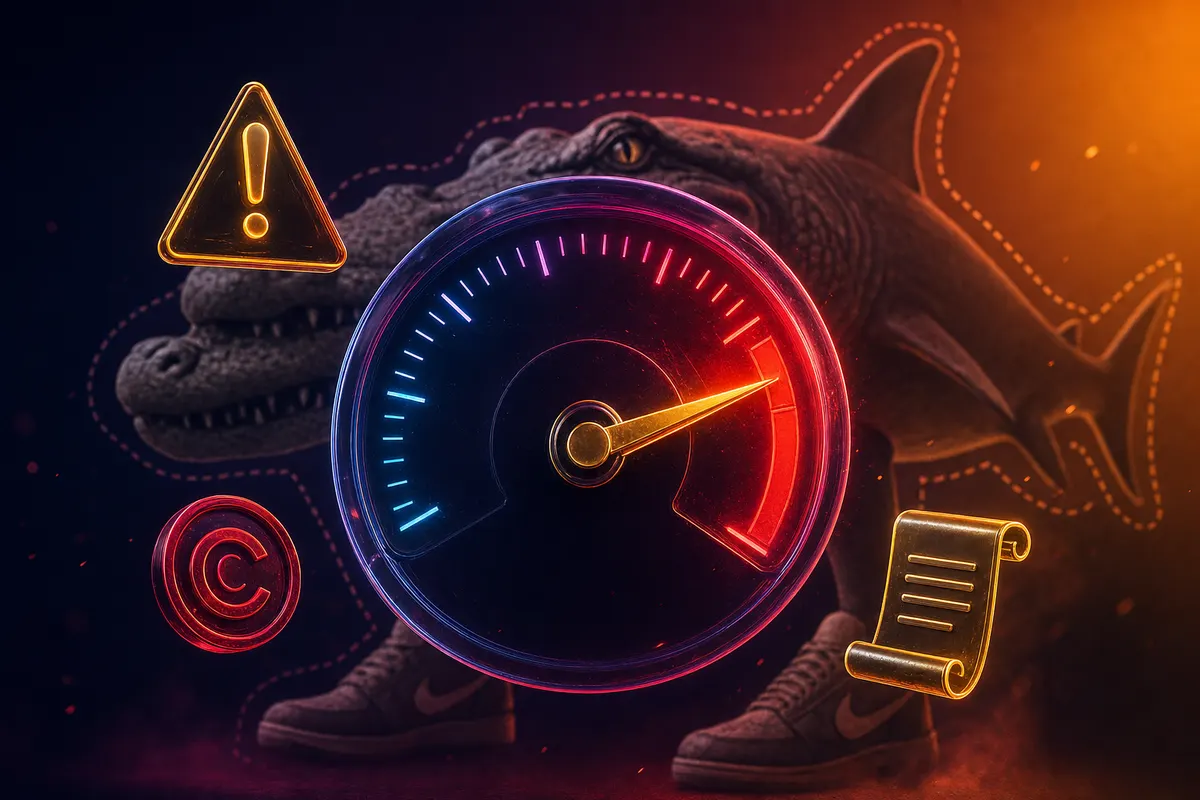
- Direct character copies. Reproducing Bombardiro Crocodilo, Tralalero Tralala, or any named Italian brainrot character with the same name and design is a take-down magnet. The Italian creator community has aggressively defended these specifically.
- Skibidi Toilet derivatives. DaFuq!?Boom! studio has the strongest IP enforcement of any brainrot creator. Skibidi-adjacent work is fine; reusing the exact Skibidi character or naming is not.
- Fruit drama canonical arc reuses. The original Apple-Banana hospital arc by the account that pioneered it in February 2026 is fair game for the format, but copying the specific character designs and naming conventions has triggered take-downs.
- Music. AI-generated music via ACE-Step is safe everywhere. Licensed tracks from TikTok's library are safe on TikTok but flag on cross-posts to Reels and Shorts. Slowed + reverb versions of mainstream songs are the highest-risk audio choice — flagged at scale on YouTube Shorts in 2026.
- Voice cloning. Cloning a real person's voice for a brainrot character violates TOS on every major platform. Use synthetic voices (Kokoro, ElevenLabs synthetic profiles) exclusively. Never upload a celebrity reference to a voice model.
The other landmine is platform-specific. TikTok added AI-content labeling requirements in 2025 and tightened enforcement in early 2026. Videos generated end-to-end by AI must carry the "made with AI" label. The label does not affect distribution — TikTok publicly confirmed this in the March 2026 Creator Update — but unlabeled AI content that gets caught is removed and counts against the account's standing. The FacelessGenie autopublish flow adds the label automatically.
Instagram has a similar policy. YouTube Shorts requires AI labels on videos containing realistic AI-generated people or events. Brainrot characters are clearly fictional and stylized, so they do not require the label under YouTube's current rules — but cross-posting a Reels-style video that does contain a labeled AI element will inherit the label on YouTube. Set the labeling correctly in FacelessGenie once and it carries across all three platforms.
The single biggest lever in this whole guide isn't the model stack — it's the lock. Pick two or three characters, give them names and a recurring bit, and never swap them out; that one decision is why the median account in our data lands its first 1M-view hit on day 11 instead of day 47. Niche, model choice, and posting slot are all optimization sitting on top of a cast that already exists. For the platform mechanics underneath all of it, see our deep dive on how to go viral on tiktok.
If you're still weighing brainrot against other faceless formats, our guides on faceless reels and best free AI video generator cover the adjacent choices. But if the fruit-drama numbers above already made the case, skip the comparison and put it to work on FacelessGenie: lock two characters, run the 4-beat arc, and watch your first render finish before the pricing tab does.
Frequently asked questions
An AI brainrot generator is a pipeline that combines a script LLM, an image model, an image-to-video model with native audio, a TTS model, and an automatic stitcher to produce short-form anthropomorphic-character videos in the brainrot genre. FacelessGenie's talking-objects format is purpose-built for this — it ships scene image consistency, a reusable character library, and one-click autopublish to TikTok / Reels / Shorts.
Ship your first faceless video today.
Pick your niche. Pick your models. We render. From idea to finished short in under 7 minutes — no camera, no editor.
Keep reading
Faceless Reels: The Complete 2026 Instagram Growth Playbook
Trial-testing hooks before you publish takes a faceless Reels account's hit rate from 18% to 64% — here's the exact niche, character, and autopublish setup behind that number.
How to Go Viral on TikTok in 2026: The Hook-Math Playbook
94% of the TikToks that break 5M views open with a number, a question, or a contradiction in the first second — none of it is luck.
YouTube Shorts Length in 2026: Max, Ideal Time & Aspect Ratio
Shorts can now run up to 3 minutes, but our data from 1,100 channels shows most niches still peak at 35-58 seconds — pad past that and retention collapses.