AI Character Video Generator: Create Consistent Character Videos in 2026
Turn one photo and one unusual part of your daily life into a recognizable series. Includes a complete Bangkok character-vlog production kit you can copy field by field.
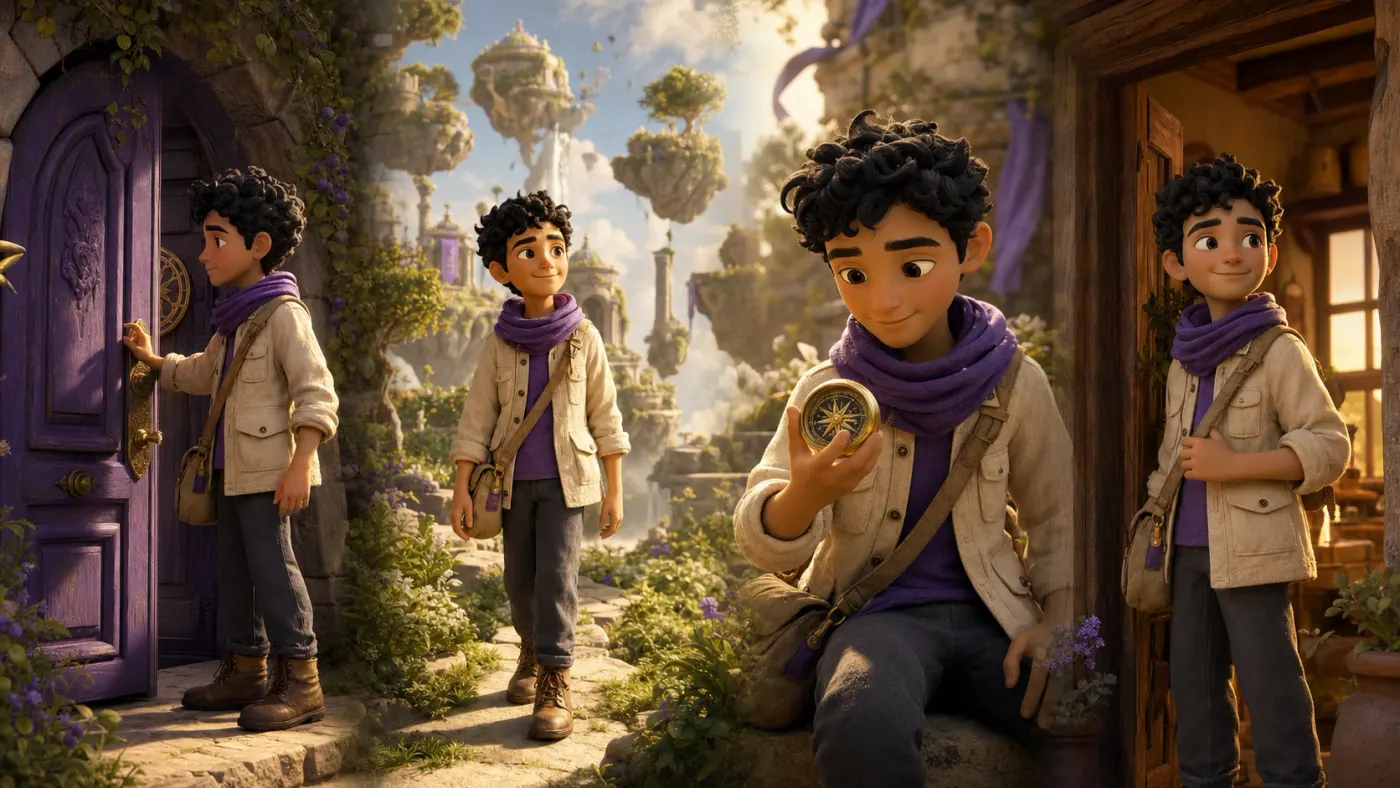
A viewer may forget a useful tip five minutes after scrolling past it, but they often remember the tiny robot who saved a flower, the fox librarian who solved a mystery, or the anxious courier who always arrives one minute before disaster. A recurring character gives a video something facts alone cannot provide: a face, a point of view, and a reason to come back for the next episode.
That is the promise of an AI character video generator. You create or upload one main character, choose the look of the world, and build scenes around the same recognizable hero. The result can be a ten-second joke, a one-minute lesson, a continuing vertical series, or a longer widescreen story. You do not need to appear on camera, draw every frame, or own a studio. You do need a clear character and a simple story worth watching.
What is an AI character video?
An AI character video is a story, lesson, comedy sketch, or message built around one recurring visual character. That character appears throughout the scenes with the same core identity, even when the location, action, emotion, or camera view changes. The hero might be a person, an animal, a toy, a friendly creature, a robot, or an entirely original imaginary figure. What matters is that viewers can recognize them immediately.
The format sits comfortably between animation and faceless video. It has the personality and continuity of an animated story, yet the creator never has to perform in front of a camera. This makes it useful for people who want a distinctive channel identity without becoming the public face of that channel. It also suits stories that would be difficult, expensive, or impossible to film in real life: a child exploring a floating city, a fox managing a midnight library, or a little robot tending a rooftop garden above the clouds.
| Format | What connects the scenes | Best for |
|---|---|---|
| Character video | One recurring hero | Stories, series, lessons, comedy, and brand mascots |
| General faceless video | Narration and topic | Lists, news, explanations, and broad visual variety |
| Talking presenter | A host speaking to the viewer | Direct instruction, opinions, and announcements |
| Slideshow | A sequence of still visuals | Simple summaries and photo-led stories |
Character videos can be brief or expansive. FacelessGenie's short Character Video format is designed for vertical viewing and can run from a quick ten seconds to two minutes. The long-form version uses a widescreen layout and can extend to fifteen minutes. Both begin with the same creative foundation: a recurring character, a chosen visual style, and a story idea. The difference is how much change that story needs to sustain attention.
Why recurring characters work
Recognition is powerful. When viewers see the same silhouette, colors, clothing, or face in another post, they understand that they have returned to a familiar world. They spend less time working out what they are watching and more time following what happens. This is especially valuable in a crowded feed where every video has only a moment to communicate its identity.
A recurring hero also creates emotional continuity. The first video can introduce a nervous apprentice. The second can show a small success. The fifth can revisit an earlier fear. Each episode adds a little meaning to the ones before it. Viewers are no longer watching an isolated tip or joke; they are watching someone develop. That sense of progress can exist even in light comedy. A proud cat detective who always reaches the wrong conclusion becomes funnier when the audience knows the pattern.
“A memorable series changes the problem, not the identity of the hero.”
Design a character viewers recognize instantly
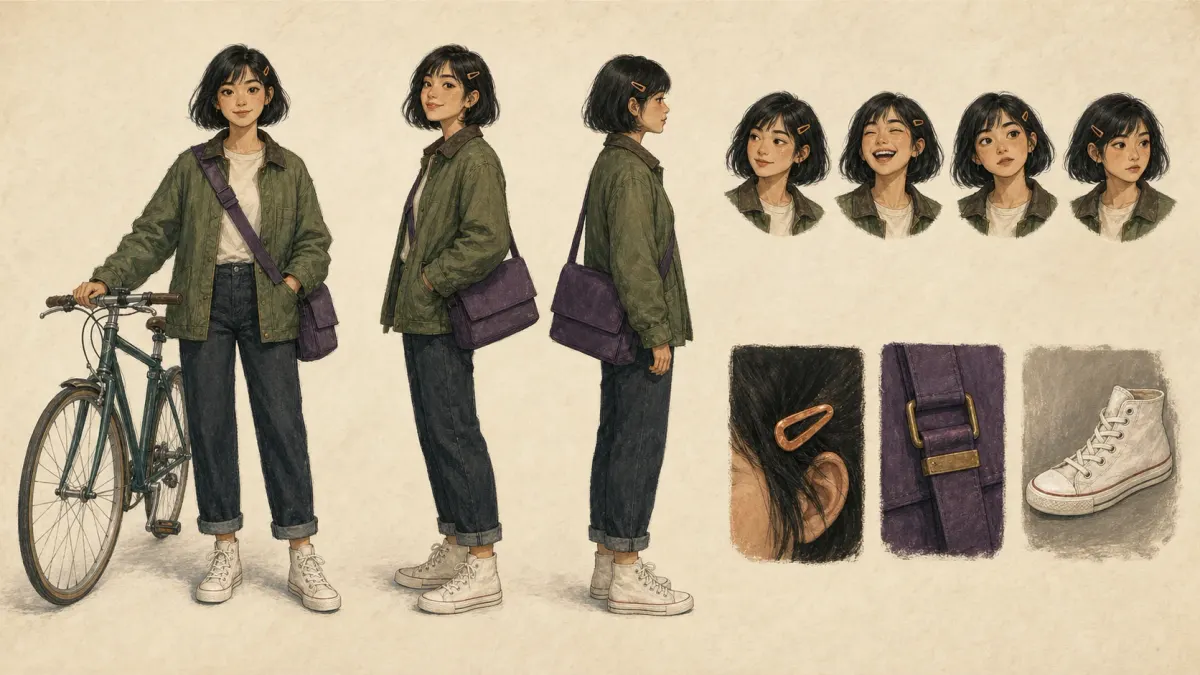
A good character does not need the most complicated outfit or the most unusual face. In fact, simplicity often improves recognition. Start with three layers: a clear silhouette, two or three signature details, and an emotional quality. A round little robot with a square amber light and a purple gardening apron is easier to remember than a machine covered in dozens of tiny decorations. A courier with a chin-length bob, copper hair clip, moss-green jacket, and purple shoulder bag has enough identity to remain distinct without becoming visually busy.
Choose signature details
Signature details are the visual promises you keep in every scene. Pick a small set: perhaps a purple scarf, cream jacket, dark curls, brown boots, and gold compass. Color is especially useful because viewers notice it quickly. Make one color dominant, one supportive, and one a small accent. Avoid giving every item equal brightness. The character should have a visual order that guides the eye toward the face and the most important prop.
Props can carry story as well as identity. A notebook suggests curiosity. A dented watering can suggests care and persistence. A red book gives a librarian character something to protect, lose, lend, or search for. Choose a prop that can return naturally in future episodes. It should support the character's role rather than feel attached only to make the design more complicated.
- Name or role: what viewers will call the character.
- Goal: what they want in most stories.
- Strength: the quality that helps them move forward.
- Flaw: the habit that creates trouble or comedy.
- Signature colors: one main color, one supporting color, and one accent.
- Fixed details: hair, clothing, face, body shape, and a recurring prop.
- Typical expression: the look viewers will associate with them.
Choose the right visual style
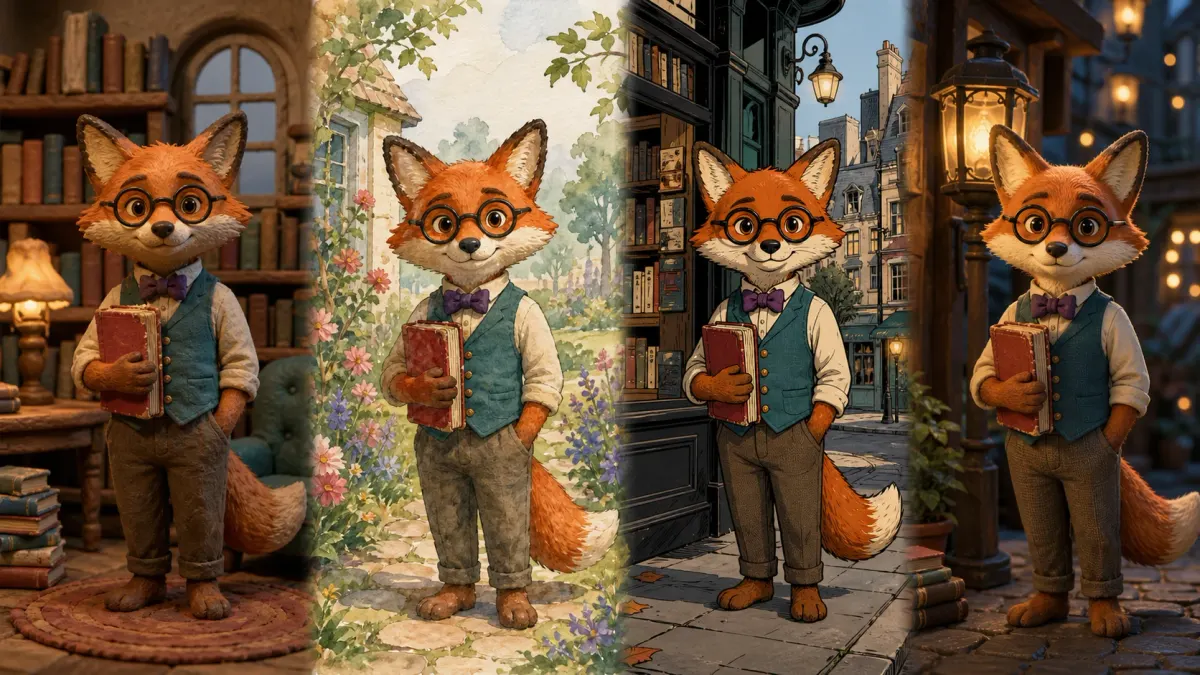
Visual style tells the viewer how to feel before the first line is spoken. A soft storybook look feels warm and reflective. Clay-like animation feels playful and handmade. A bold comic look carries energy and humor. A polished three-dimensional world can make an adventure feel large and cinematic. There is no single best style. The best choice supports the subject, audience, and pace of the story.
Begin with emotion rather than fashion. Ask whether the video should feel comforting, exciting, funny, mysterious, elegant, strange, or educational. Then choose a visual treatment that naturally communicates that mood. A bedtime story may benefit from soft edges, gentle colors, and cozy lighting. A fast comedy series may need brighter contrast and larger expressions. A mystery can use deeper shadows and warmer pools of light without becoming frightening.
| Style direction | Feeling | Works well for |
|---|---|---|
| Clay-like animation | Playful, tactile, friendly | Comedy, children's stories, gentle lessons |
| Watercolor storybook | Soft, thoughtful, timeless | Bedtime stories, folklore, reflective themes |
| Bold comic illustration | Fast, expressive, energetic | Humor, action, dramatic opinions |
| Polished 3D | Immersive, adventurous, cinematic | Fantasy, travel, emotional storytelling |
| Clean editorial illustration | Modern, calm, clear | Education, wellness, business, lifestyle |
Short-form vs long-form character videos

Short and long character videos are not the same story at different lengths. A short vertical video needs one instantly understandable situation. A long widescreen video needs progression. Trying to stretch a fifteen-second idea across five minutes produces repetition, while squeezing a five-minute plot into thirty seconds produces confusion.
Short-form: one moment that changes
For Shorts, Reels, and TikTok, enter the story as late as possible. Show the unusual situation in the opening moment, establish what the character wants, create one obstacle, and reach a payoff. The hero might discover that the tiny seed they ignored has filled the room with vines. A courier might arrive at the correct address but realize the package is for tomorrow. A fox librarian might hear a book whisper their name. Each idea can be understood with a glance and resolved with one turn.
Vertical framing favors a large, clear character. Keep important action near the center and avoid filling the edges with details the viewer cannot notice. Two characters can work, but give them separate moments rather than making both compete for attention in every shot. Captions should leave the face visible. If the character's expression carries the joke, hold it long enough to be read before moving on.
Long-form: a sequence of meaningful choices
Long-form character videos need chapters, even when those chapters are not named on screen. The hero begins with a goal, meets a series of obstacles, changes their approach, reaches a difficult choice, and earns a result. New locations and side characters can refresh the journey, but each part should affect what follows. If a scene can be removed without changing anything, it is probably not helping the story.
| Choice | Short-form character video | Long-form character video |
|---|---|---|
| Screen shape | Vertical 9:16 | Widescreen 16:9 |
| Length | 10 seconds to 2 minutes | Up to 15 minutes |
| Story size | One setup, obstacle, and payoff | Several connected obstacles and a larger change |
| Main cast | Usually one or two | One hero with room for supporting characters |
| Framing | Close and immediately readable | A mix of wide scenes, action, and close emotion |
| Best use | Hooks, jokes, quick lessons, mini-stories | Episodes, adventures, deeper lessons, narrated stories |
Build a story viewers want to finish
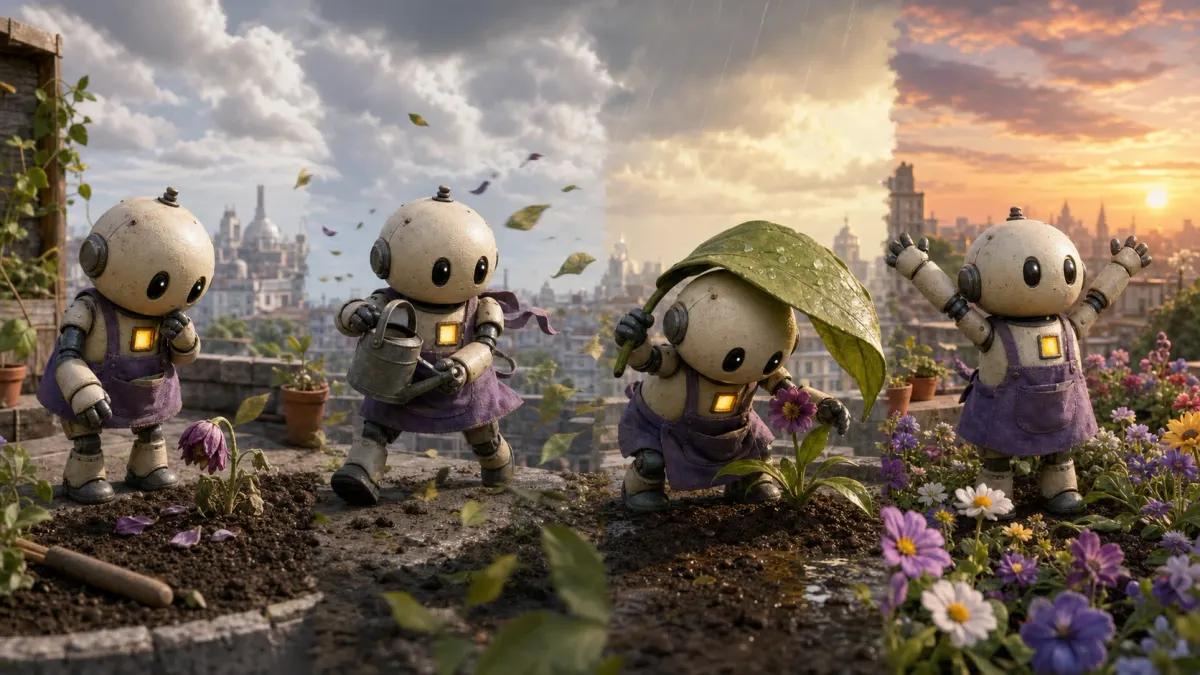
Visual beauty may earn attention, but change is what makes a story satisfying. Something must be different at the end. The change can be large, such as finding a lost home, or tiny, such as a stubborn character finally accepting help. Without change, a video feels like a collection of poses. With change, even four scenes can feel complete.
1. Open with a question the viewer can see
The hook should be visible before it is fully explained. Show the wilted flower, the locked purple door, the missing bicycle wheel, or the letter with no name. The viewer should be able to ask what happened or what the character will do. A spoken question can help, but it should not carry the entire burden. If the opening still makes sense with the sound muted, it is usually stronger.
2. Give the character one clear desire
A character who wants nothing has no reason to act. The desire can be practical, emotional, or comic: deliver the parcel, save the plant, impress a friend, solve the clue, reach the concert, or avoid admitting a mistake. State or show it early. In a short video, one desire is enough. In a longer story, the first desire may reveal a deeper one. The detective thinks she wants to solve the case but eventually realizes she wants to trust her own judgment.
3. Create an obstacle that tests personality
The best obstacle is not merely a delay. It pressures the character's flaw or belief. A hurried courier must slow down to read a faded sign. A proud inventor must ask for help. A cautious fox must leave the safety of the library. This connection between obstacle and personality gives the action meaning. A random storm can look dramatic, but a storm that forces a timid hero to protect someone else reveals character.
4. Pay off what the opening promised
The ending should answer the opening question and ideally add one final emotion: delight, relief, surprise, laughter, or reflection. If the story begins with a mysterious door, the viewer should learn what is behind it. If the robot cares for a flower, reveal the bloom. A twist is optional. Clarity is not. Many weak videos chase an unexpected ending and forget to resolve the simple thing that made the viewer stay.
How to create a character video step by step
A simple process protects creativity because it gives each decision a place. Do not try to solve the character, story, style, sound, and final polish at the same time. Move from the idea to the hero, then from the hero to the scenes. Review the complete draft before publishing. The following workflow works for a first experiment and can later become a repeatable routine for a series.
- 1Choose the format. Use Character Video for a vertical short, or select Character Video (Long-form) for a widescreen episode.
- 2Write the idea in one sentence. Name the hero, what they want, and what gets in the way.
- 3Create a new character or upload a clear reference image you have permission to use.
- 4Choose a visual style that matches the emotion and audience of the story.
- 5Select the length. Keep a first short video focused on one moment; give a longer story enough time for genuine progression.
- 6Add the topic and genre in plain language. Describe what happens, not just the broad subject.
- 7Review the planned story. Make sure every scene belongs to the same journey and the ending answers the opening.
- 8Choose a voice, captions, and music that support the character without competing for attention.
- 9Generate the video and watch it once with sound and once muted.
- 10Fix only what weakens recognition or understanding, then export and publish in the correct screen shape.
Describe actions, not vague themes
A broad idea such as friendship, confidence, or adventure leaves too many unanswered questions. Turn it into something visible: a shy robot rehearses a thank-you speech for the gardener who repaired him, but the garden party begins early. Now the character has an action, an emotion, a setting, an obstacle, and a possible ending. Concrete ideas produce scenes that feel connected because the story knows where it is going.
Keep the first attempt manageable. One hero, one main location, one problem, and one important prop are enough. Extra characters and locations can make a video feel bigger, but they also divide attention. A simple story told clearly is more memorable than an ambitious story the viewer cannot follow.
Complete example: make a day-in-the-life character vlog
A day-in-the-life series works because an ordinary routine becomes unusual when the person, place, or constraint is specific. An American expat's normal Tuesday in Bangkok can contain a street breakfast, an elevated train, a motorbike, sudden rain, remote work, a night market, and a quiet apartment. The creator experiences a routine; the viewer enters a world.
Do not paste the story, character description, visual style, and camera movement into one giant prompt. Character Video gives each decision its own field. The workflow below separates them so the narration controls the story, Image details control the visual identity, and Animation details control motion.
1. Use these exact Character Video settings
- 1Open Character Video.
- 2Choose 9:16 and 60 seconds.
- 3Choose Realistic claymation and keep that style for every episode in the series.
- 4Upload one clear photo under Main character, describe a new character, or reuse a saved character from your library.
- 5Open the Script tab so the narration and scene order stay under your control.
For your uploaded image, use one person, show the full head and upper body, use clear lighting and a simple background, and avoid sunglasses, heavy shadows, text, or logos. The upload becomes a stylized reusable character rather than appearing as the original photograph in every scene.
2. Paste this exact narration into the Script tab
Keep one blank line between paragraphs. Each paragraph becomes one story section. The scene table also shows what you should expect visually when you review the generated result.
| Beat | Exact narration | Visual review target |
|---|---|---|
| Hook | I sold everything I owned in America and moved to Bangkok. This is what an ordinary Tuesday looks like now. | The recurring character stands in a nearly empty American apartment beside two packed suitcases, followed by a fast reveal of the same character looking across the Bangkok skyline at dawn. |
| The new morning | At 6:10, I wake up above a street that has already been alive for hours. | The character opens the curtains of a small apartment as warm sunrise light reveals a busy street already moving below. |
| The first familiar face | The woman downstairs starts my grilled pork and sticky rice before I even reach her cart. | A smiling street-food vendor sees the character approaching and begins preparing the usual breakfast beside a steaming cart. |
| The commute | Then it is a train, a motorbike, and one questionable shortcut to the coworking space. | The character rides safely as a motorbike passenger beneath an elevated train line, then points uncertainly toward a narrow shortcut while holding the black backpack. |
| The problem | At 8:17, rain starts falling sideways. Everyone has a raincoat except the American who checked the forecast. | Sudden tropical rain begins while the character holds the backpack overhead and nearby commuters calmly put on raincoats. |
| The workday | I spend the afternoon building my business while my shoes dry under the desk. | The character works intently on a laptop at a warm coworking desk with damp shoes drying underneath while rain streaks the window. |
| The evening | After work, dinner is noodles at the night market and a long walk home through neon and rain. | The character eats noodles at a night-market counter under warm neon lights while people pass softly in the background. |
| The payoff | People ask if living here feels like a vacation. It does not. It feels like a life -- and that is exactly why I stayed. | The character sits peacefully by the apartment window at night, smiling at the city lights while the black backpack rests by the door. |
3. Paste these into Fine-tune visuals
Image details describe what should remain visually true across the series. Animation details describe how the camera, character, and environment should move. Keeping them separate makes revisions much easier: if the character looks wrong, change Image details; if the scene feels static or chaotic, change Animation details.
4. Set the narrator, captions, and music
- Choose one warm, conversational narrator and keep that voice throughout the series.
- Keep captions enabled and use one consistent caption style.
- Choose music with light city energy and keep it quiet under the narration.
- Write in first person. Character Video uses narration over the animated scenes rather than a talking-head lip-sync performance.
5. Generate once, then repair the weakest scene
- 1Watch the opening three seconds without sound. The character, city, and unusual-morning promise should be immediately readable.
- 2Check the face, hairstyle, yellow overshirt, and black backpack across all eight story beats.
- 3Identify the weakest scene and regenerate or replace that scene in Studio before changing the whole video.
- 4Watch again with narration and captions. Shorten any sentence that feels rushed instead of speeding up the narrator.
6. Turn one episode into a week of content
- 1Publish the 60-second Tuesday story as the complete short.
- 2Cut the rain scene into a 12-second standalone hook with its own payoff.
- 3Cut the train-to-motorbike commute into a second short built around the surprising detail.
- 4Expand the full day into a three-to-eight-minute 16:9 YouTube episode with more moments, reflection, and a stronger ending.
- 5Attach the full episode as the Related Video on the YouTube Shorts versions.
Once the first episode works, keep the same character and world while changing the daily problem. The next five episode ideas are already waiting:
- The Bangkok habit I finally stopped fighting
- What $5 buys during my ordinary workday
- The rainy-season mistake I made for three months
- The quietest hour in a city that never feels quiet
- The part of working abroad nobody puts in the montage
Character video ideas for different channels
Education and simple explainers
Use a curious beginner who asks the questions viewers might hesitate to ask. The character can enter a new world in each episode: the inside of a clock to learn time, a giant kitchen to learn measurements, or a tiny town run by words to learn grammar. Keep the lesson tied to a problem. The hero should need the information in order to move forward, which makes the explanation feel useful rather than added on top of the story.
Comedy and everyday life
Build comedy around a repeatable flaw. A detective notices every clue except the obvious one. A chef treats toast like fine dining. A superhero is fearless until a phone call arrives. The episode changes, but the audience understands the comic expectation. Let the character occasionally break the pattern so the joke does not become predictable. The coward can be brave once, or the expert can confidently make the simplest mistake.
Motivation and wellness
Show small actions instead of relying on large speeches. A character tidies one corner of a room, takes the first step onto a trail, practices one musical note, or waters a neglected plant. Progress becomes visible and believable. Gentle recurring stories work particularly well here because viewers can see the hero improve over time. Avoid making every episode a perfect success; setbacks make later progress feel earned.
Small brands and mascots
A mascot can demonstrate a product, welcome customers, answer common questions, or tell stories related to the brand's values. Give the mascot interests and problems beyond selling. A travel bag can worry about being overpacked. A tea-shop fox can search for the perfect rainy-day blend. A plant-care mascot can rescue a drooping office fern. The product or service belongs inside the story, but it should not turn every line into an advertisement.
Adventure, mystery, and bedtime stories
Fictional characters are ideal when the channel is built around imagination. Give each series a dependable promise: one gentle mystery before bedtime, one magical delivery in every episode, or one forgotten place rediscovered each week. Adventure does not require constant danger. Wonder, discovery, and emotional stakes can carry the story. For children, keep the goal clear, the conflict age-appropriate, and the ending reassuring. For a general audience, let the world be beautiful but keep the feelings familiar.
- A cloud keeper who returns lost shapes to the sky.
- A bicycle courier who delivers parcels to impossible addresses.
- A fox librarian who hears unfinished stories after closing time.
- A tiny robot who restores one neglected rooftop garden at a time.
- A nervous museum guard whose painted subjects quietly offer advice.
- A young detective solving warm, low-stakes mysteries at a railway station.
- A moon baker creating a different dream for every customer.
- A retired dragon teaching ordinary household skills with unnecessary drama.
- A neighborhood cat reviewing human habits as if they are local news.
- A paper boat exploring a new puddle-sized world after every rainstorm.
How to keep your character consistent
Consistency does not mean freezing the character in one pose. The hero should run, laugh, worry, turn around, enter new light, and wear expressions suited to the scene. Consistency means those changes still belong to the same person or creature. The fixed identity remains steady while action and emotion vary.
Separate details into fixed and flexible groups. Fixed details include face shape, hair, skin or fur color, body proportions, signature clothing, and the main color palette. Flexible details include expression, pose, weather, time of day, camera distance, and temporary objects. A winter episode can add a coat, but the character's face, hair, and signature accent should still be visible. A costume episode can change clothing deliberately, but another familiar detail should carry recognition.
Use a clear starting image
Choose a reference where the character is easy to see. A simple background, clear face, readable clothing, and natural full or three-quarter view provide a stronger foundation than a dark group scene. Avoid hiding the eyes, hands, or signature prop unless that hidden quality is central to the design. If you create the character from scratch, settle on the design before writing a large season around it.
Repeat the same identity language
Use the same simple description whenever you plan an episode: age or type, body shape, face or hair, signature outfit, main colors, and important prop. Do not replace clear details with changing poetic phrases. Calling a jacket moss green in one plan, emerald in another, and dark olive in a third invites unnecessary variation. Pick the wording that matches the approved design and keep it steady.
Give every scene one main job
Crowded scenes make both storytelling and character recognition harder. If the scene is about discovering the clue, show the hero, the clue, and enough of the location to understand where they are. If the next scene is about a reaction, move closer to the face. Keeping a clear visual priority prevents the hero from being lost among background characters, elaborate scenery, and decorative objects.
Check continuity before publishing
Watch for the details viewers notice unconsciously. Does the bag stay on the same shoulder unless the character moves it? Does a notebook remain purple? Does the hero enter with boots and leave with trainers? Does an object disappear before it has served its purpose? Tiny differences do not always ruin a video, and natural movement is welcome, but changes that affect identity or story logic should be corrected.
Voice, captions, and music should support the character
The voice completes the character design. Match it to personality rather than appearance alone. A tiny creature can speak with calm confidence; a large dragon can be soft and nervous. Pace matters as much as pitch. A thoughtful librarian may pause before an answer. An excited courier may rush, catch her breath, and correct herself. Keep the delivery easy to understand, especially when the video also contains music and sound effects.
Captions are essential for viewers watching without sound, but they should not cover the performance. Keep them large enough to read, break lines at natural points, and avoid placing them over the character's face or an important object. Use emphasis sparingly. If every word changes color or jumps, the captions compete with the story. Their first job is clarity.
Music establishes mood and pace. Choose one clear musical direction rather than layering several unrelated feelings. Gentle wonder suits discovery, light rhythm supports comedy, and a restrained pulse can add mystery. Lower the music whenever a spoken line matters. Silence can also be expressive. A brief pause before the door opens or before the flower lifts its head can make the reveal feel larger.
- Use one voice consistently for the recurring hero.
- Keep the pace suited to the character and audience.
- Write spoken language, not essay language.
- Place captions away from faces and important actions.
- Choose music for one main emotion in each section.
- Leave space for reactions, reveals, and quiet moments.
Turn separate videos into a recognizable series
A series gives the audience a promise. They know what kind of experience they will receive, while each episode supplies a new situation. Define that promise in one sentence: every Friday, the fox librarian finds a book that should not exist; in each short, the robot saves one overlooked plant; every episode, the courier delivers a parcel to a place that breaks one ordinary rule. A clear promise helps viewers remember the channel and helps you decide which ideas belong.
Build three kinds of repetition. Visual repetition includes the hero, style, colors, and perhaps an opening location. Story repetition includes a familiar type of goal or problem. Emotional repetition includes the feeling viewers expect, such as comfort, gentle mystery, quick comedy, or motivation. Then change the episode-specific details: the object, visitor, clue, location, weather, misunderstanding, or lesson.
Plan small groups of episodes instead of a year at once. Start with three related ideas that test the same character in different ways. For a courier series, one delivery may require patience, one honesty, and one courage. Publish them close enough together that recognition can grow. Notice which part viewers respond to: the world, the recurring joke, the emotional lesson, or the supporting character. Use that response to shape the next group without abandoning the central promise.
Give each episode a complete ending even when a larger thread continues. A cliffhanger can encourage the next view, but a series built only from incomplete fragments can frustrate new viewers. Resolve the episode's immediate question, then leave a small new possibility. The robot saves today's flower and notices a strange seed glowing in the final shot. Satisfaction comes first; curiosity follows.
Common character video mistakes
Making the character too complicated
A design covered in patterns, jewelry, tools, layered clothing, unusual markings, and several bright colors may look impressive in one portrait but become difficult to recognize across movement and distance. Remove details until the important ones have room to be noticed. Complexity can live in the world and story; the hero needs a stable visual core.
Creating scenes without a goal
A character walking through beautiful places is a visual tour, not automatically a story. Give the walk a purpose. They are searching for a sound, delivering a message, following a map, or trying to reach home before the rain. Purpose turns scenery into progress because every location either helps or blocks the hero.
Explaining too much before anything happens
Long introductions are especially costly in short-form video. Viewers do not need the character's full history before the first action. Show the problem, then reveal background only when it changes how the viewer understands the moment. Start with the fox finding the forbidden book, not with a tour of the library and a summary of the fox's childhood.
Changing visual direction inside one story
A sudden shift from soft storybook art to realistic cinema can feel like a different video unless the change has a clear story reason. Pick the style before building the scenes. Keep color, texture, and mood connected from the opening to the ending. If the story deliberately enters a dream, memory, or alternate world, signal the transition and preserve the hero's key details.
Crowding the frame
Too many characters, props, signs, effects, and background events force the viewer to search for the point. Decide what each shot is about and give that subject the strongest position. This matters most on vertical screens. A rich world can still feel clear when details are layered behind one obvious action.
Building a character that belongs to someone else
Familiar characters may seem like a shortcut to attention, but they make it harder to build an identity you own. Create an original hero, use your own approved mascot, or work with visual material you have permission to use. Inspiration can come from broad qualities such as cozy storybooks or adventurous animation, but the face, name, clothing, personality, and world should be yours.
Character video checklist before you publish
A final review should be quick and practical. Watch the video on the kind of screen where the audience will see it. For a vertical short, use a phone and check whether the hero and captions remain clear at normal viewing size. For a longer widescreen story, watch enough of it without skipping to feel whether the pace changes naturally. Use the checklist below to catch the problems that most often weaken an otherwise attractive video.
- The main character is recognizable in every scene.
- Signature colors, clothing, face, and body shape remain steady.
- The opening shows an immediate question, problem, or surprise.
- The character wants one clear thing.
- Each scene changes the situation or reveals useful information.
- The final moment answers the promise of the opening.
- The visual style fits the audience and remains consistent.
- Important action is easy to see in the chosen screen shape.
- The voice sounds like the same character throughout.
- Captions are readable and do not cover faces or key objects.
- Music supports the mood without overpowering speech.
- You own or have permission to use the character and reference image.
Frequently asked questions
It is a video maker that builds scenes around one recurring character. You create or upload the hero, choose a visual style and story idea, and produce a video in which that character remains the recognizable lead across the scenes.
Ship your first faceless video today.
Pick your niche. Pick your models. We render. From idea to finished short in under 7 minutes — no camera, no editor.
Keep reading
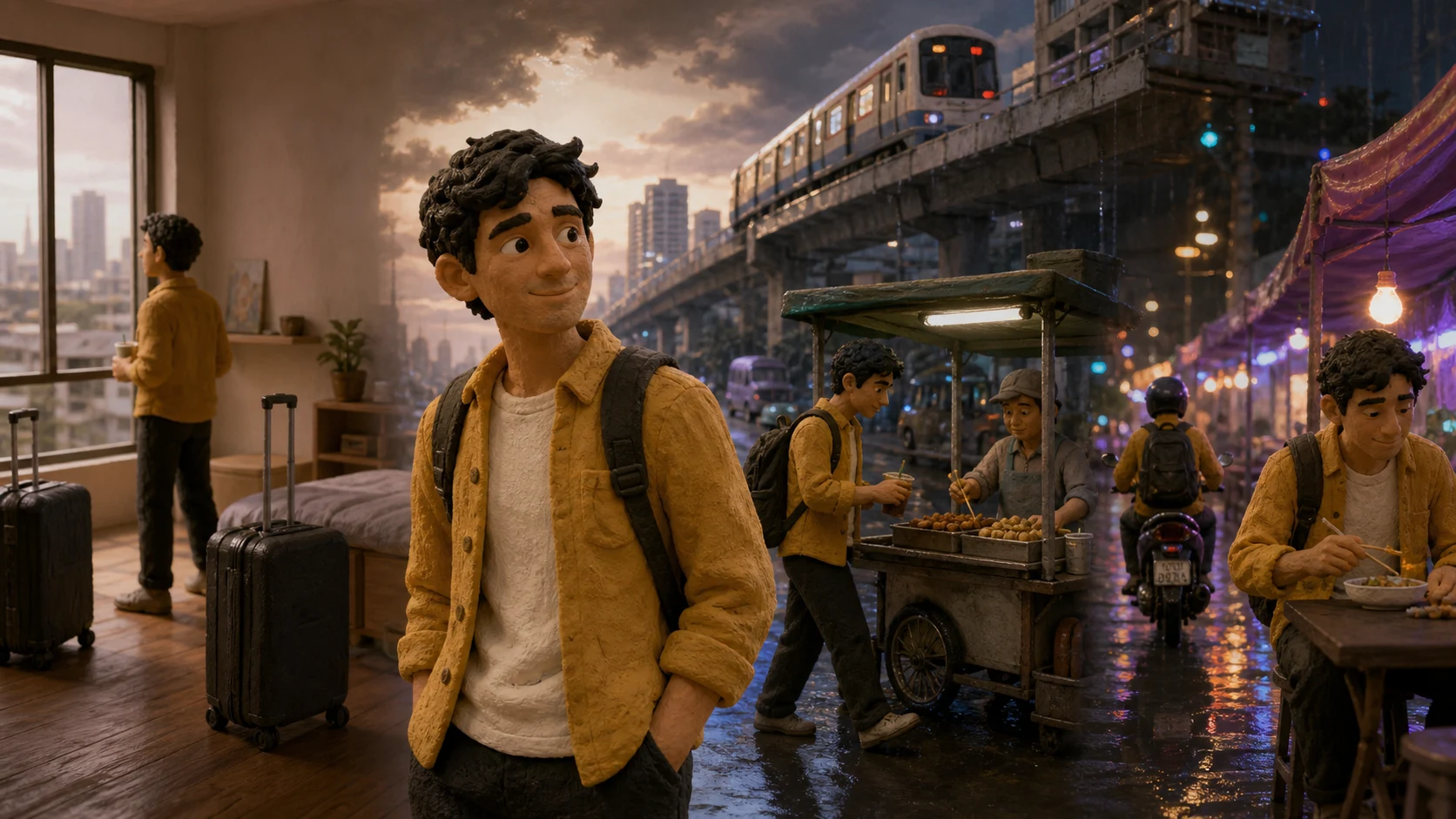
How to Make an Animated Day-in-the-Life Vlog From One Photo
A practical system for turning your real routine into a recurring animated character series for TikTok, Instagram, Shorts, and YouTube.

AI Video Script Generator 2026: Scripts That Hold Retention
Score your script before you generate: anything under a 7 out of 10 will render clean and still get skipped. Here is the hook-to-payoff system that fixes that.
AI Talking Objects Video Generator: The 2026 Production Guide
A coffee mug complaining about Monday earns more replays than a talking head repeating the same tip. This guide covers the entire cast-to-render workflow behind AI talking-object videos, from 15-second Shorts to 20-minute episodes.