How to Make an Animated Day-in-the-Life Vlog From One Photo
A practical system for turning your real routine into a recurring animated character series for TikTok, Instagram, Shorts, and YouTube.
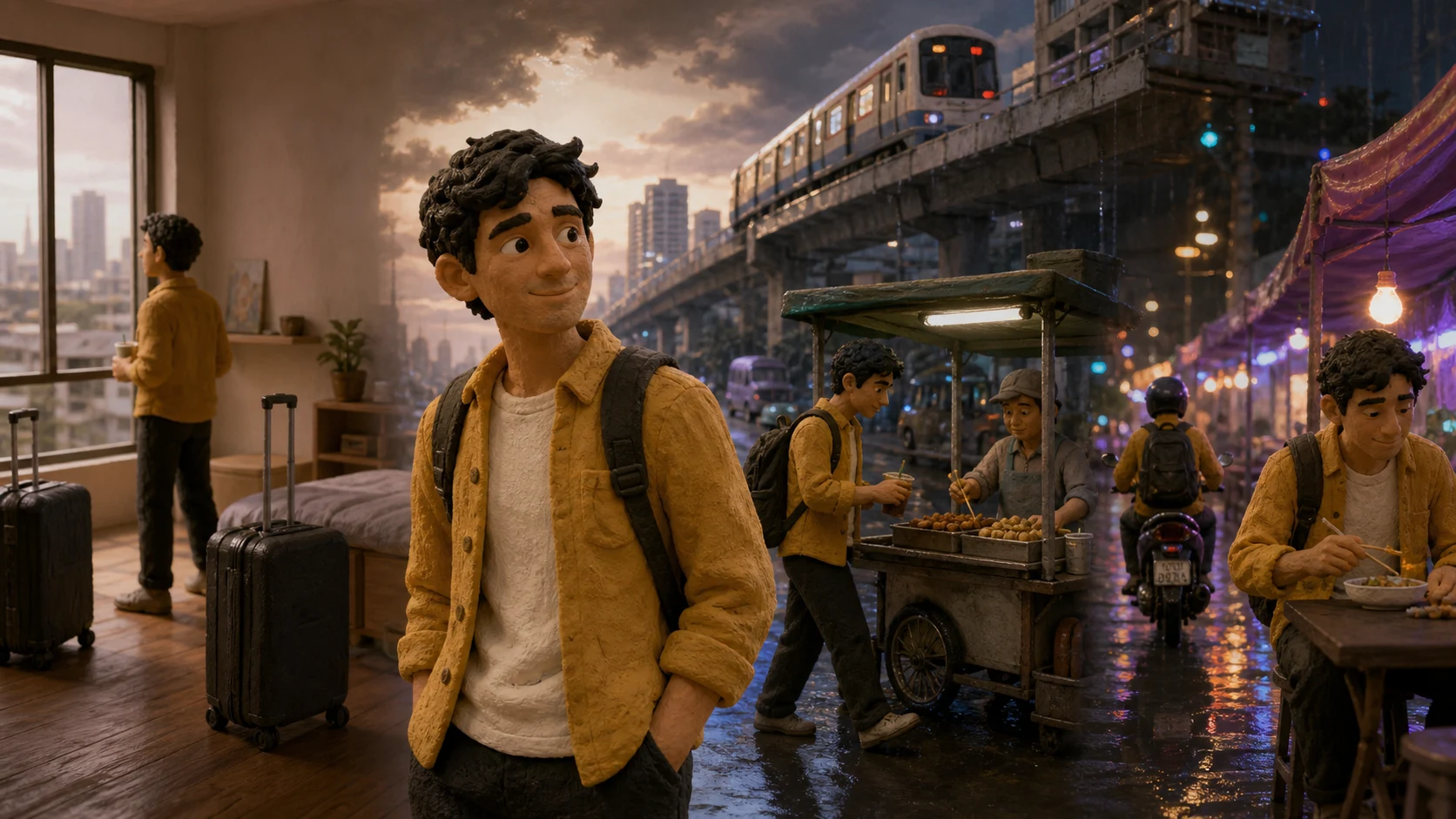
“I sold everything I owned in America and moved to Bangkok. This is what an ordinary Tuesday looks like now.”
That opening is more interesting than “a day in my life in Bangkok” because it gives the routine a consequence. Someone made a large decision, entered a new world, and now the viewer gets to see what that decision feels like on an ordinary day.
This is the opportunity behind an animated day-in-the-life vlog. You take a real person, place, job, hobby, or constraint and turn it into a recurring character series. You do not need to carry a camera all day or perform in every shot. One clear photo can become the visual identity, while narration carries the story across animated scenes.
The strongest version is not a random montage of breakfast, commuting, and work. It is a small story with a specific person, a world viewers want to enter, one problem that changes the plan, and a final line that gives the day meaning. This guide shows the entire workflow, including an exact narration script, visual instructions, and a plan for turning one episode into both short-form posts and a longer YouTube destination.
Why animated day-in-the-life videos work
Most people believe their routine is too ordinary to become content. Usually, the routine is not the problem. The framing is. Breakfast from a street cart, a crowded train, a motorbike ride, sudden rain, a coworking desk, and noodles after work may feel normal to an expat in Bangkok. To a viewer living somewhere else, those details open a world they have never entered.
Animation adds another advantage: recognition. The same stylized face, outfit, colors, and narrator can return in every episode. Viewers begin to recognize the character before reading the username. The creator is no longer publishing disconnected lifestyle clips. They are building a story world with a recurring hero.
Find the unusual angle inside your normal life
Start with a simple format: a day in the life of a specific person living through an interesting condition. The person creates identity. The condition creates tension. Specificity is more useful than glamour because it gives the viewer something concrete to become curious about.
- A day in the life of an American expat in Bangkok during monsoon season
- A day in the life of a night-shift baker while the city wakes up
- A day in the life of a remote worker living on a sailboat
- A day in the life of a medical student before their first surgery
- A day in the life of a single dad packing lunches at 5 a.m.
- A day in the life of someone running a tiny hostel alone
Location alone is rarely the strongest hook. Look for a decision, sacrifice, contradiction, or constraint with consequences. “I moved to Bangkok” identifies a place. “I sold everything I owned in America and moved to Bangkok” creates a before and after. It makes the viewer wonder what was gained, what became difficult, and whether the decision was worth it.
| Weak framing | Stronger story angle |
|---|---|
| My morning as a baker | I start work while the rest of the city is still asleep |
| Living on a sailboat | My home lost internet five minutes before a client call |
| Medical school vlog | Tomorrow is my first surgery, and today nothing went to plan |
| Life in Bangkok | I sold everything in America and moved to Bangkok |
Use a short-form story structure, not a montage
Do not try to explain an entire lifestyle in one video. Give the episode one small problem. Rain begins before the commute. The bakery oven fails. The hostel receives three arrivals at once. A sailboat loses its connection before a meeting. A day becomes a story when something changes the plan.
- 1Open with the highest-stakes fact. Lead with the decision, constraint, or contradiction that changed the person's life.
- 2Establish the world quickly. Show where the character is, what time it is, and what makes this routine different.
- 3Give the day one problem. Friction creates forward movement and stops the video from becoming a list of activities.
- 4Use five to eight beats. Every scene should move time, place, or tension forward.
- 5End with a change. The final line should reveal what the day meant, not simply announce that it ended.
A useful test is to remove the middle scenes and read only the opening and ending. The ending should answer or complicate the promise made by the opening. In the Bangkok example, the opening asks what life looks like after a dramatic move. The ending answers that it does not feel like a permanent vacation; it feels like a real life worth staying for.
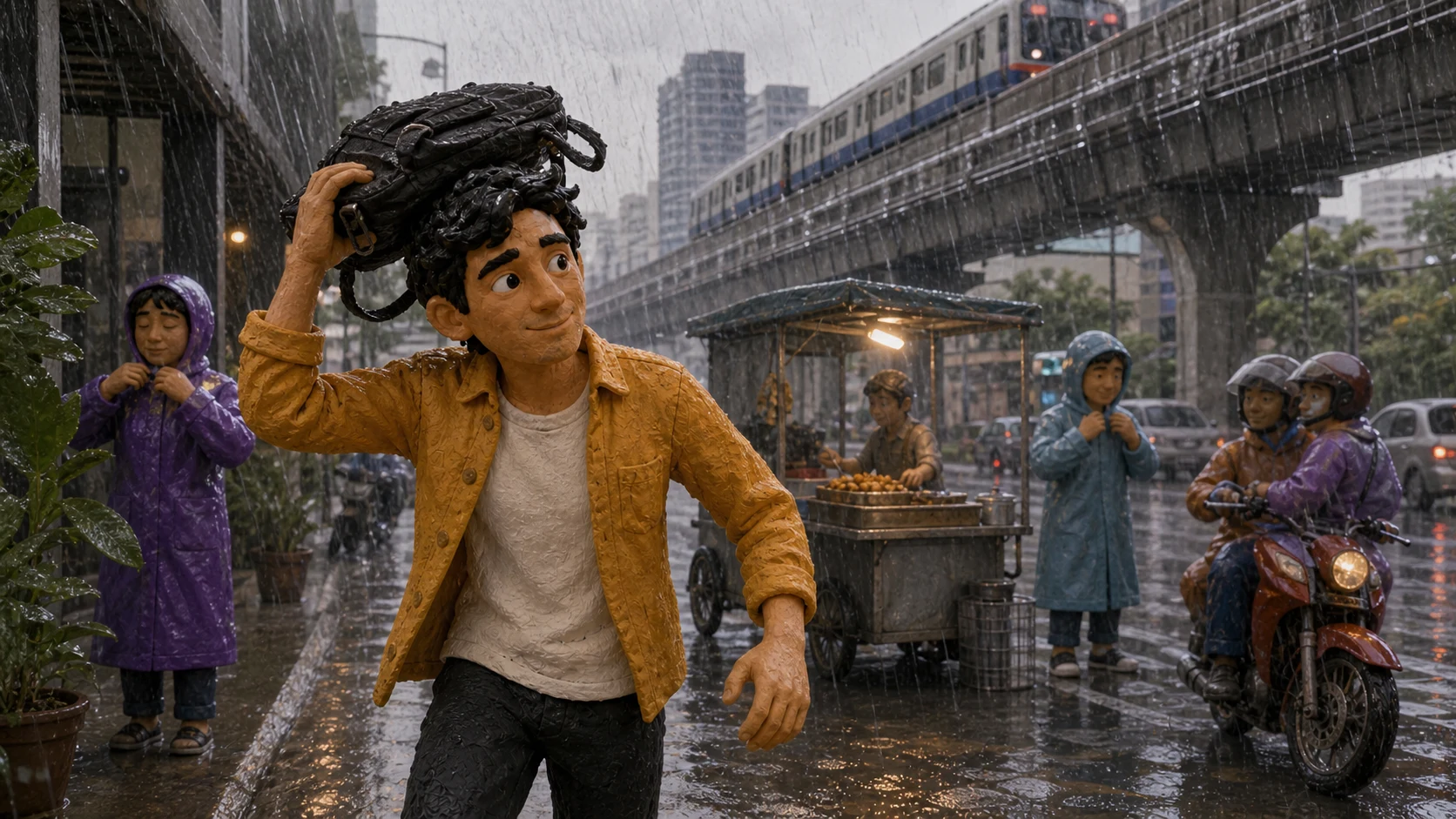
Build the Bangkok character vlog from beginning to end
The confusing approach is to place the story, character identity, art direction, camera movement, and sound into one enormous prompt. A cleaner workflow gives each decision to the field designed for it. Narration controls what happens. Image details control what the character and world look like. Animation details control movement. Voice, captions, and music control how the finished story feels.
The example below uses an American expat living in Bangkok during monsoon season. You can copy the structure exactly, then replace the personal details, location, daily beats, and final meaning with your own story.
Set up the recurring character
- 1Open Character Video.
- 2Choose 9:16 and 60 seconds.
- 3Choose Realistic claymation and keep it unchanged across the series.
- 4Under Main character, upload your photo, describe a new character, or reuse a saved character from your library.
- 5Open the Script tab so you can control the narration and scene order.
For the reference photo, use one person with the full head and upper body visible. Choose clear, even lighting and a simple background. Avoid sunglasses, heavy shadows, strong filters, text, and logos. A clean starting image makes the face and signature clothing easier to preserve as the camera angle and location change.
Copy this complete narration script
Paste the narration into the Script tab and keep one blank line between paragraphs. Each paragraph becomes one story section. The visual review target is not another prompt to paste; it is a map for checking whether each generated scene communicates the intended beat.
| Beat | Narration | Visual review target |
|---|---|---|
| Hook | I sold everything I owned in America and moved to Bangkok. This is what an ordinary Tuesday looks like now. | The recurring character stands in a nearly empty American apartment beside two packed suitcases, followed by a fast reveal of the same character looking across the Bangkok skyline at dawn. |
| The new morning | At 6:10, I wake up above a street that has already been alive for hours. | The character opens the curtains of a small apartment as warm sunrise light reveals a busy street already moving below. |
| The first familiar face | The woman downstairs starts my grilled pork and sticky rice before I even reach her cart. | A smiling street-food vendor sees the character approaching and begins preparing the usual breakfast beside a steaming cart. |
| The commute | Then it is a train, a motorbike, and one questionable shortcut to the coworking space. | The character rides safely as a motorbike passenger beneath an elevated train line, then points uncertainly toward a narrow shortcut while holding the black backpack. |
| The problem | At 8:17, rain starts falling sideways. Everyone has a raincoat except the American who checked the forecast. | Sudden tropical rain begins while the character holds the backpack overhead and nearby commuters calmly put on raincoats. |
| The workday | I spend the afternoon building my business while my shoes dry under the desk. | The character works intently on a laptop at a warm coworking desk with damp shoes drying underneath while rain streaks the window. |
| The evening | After work, dinner is noodles at the night market and a long walk home through neon and rain. | The character eats noodles at a night-market counter under warm neon lights while people pass softly in the background. |
| The payoff | People ask if living here feels like a vacation. It does not. It feels like a life -- and that is exactly why I stayed. | The character sits peacefully by the apartment window at night, smiling at the city lights while the black backpack rests by the door. |
Notice the progression. The first line creates the life-changing decision. The next two scenes establish the city through sound, food, and movement. The rain adds a problem. Work reveals the ordinary reality beneath the dramatic relocation. The night market provides visual release, and the final sentence explains what the move now means.
Copy the image and animation instructions separately
Open Fine-tune visuals. Place the first instruction in Image details and the second in Animation details. Keeping appearance separate from movement makes the result easier to control and repair.
Image details define what should remain visually true: the same person, recognizable clothing, stylized clay look, humid daylight, wet surfaces, and softer neon at night. Animation details tell the camera and environment how to behave: handheld vlog movement, readable actions, natural crowd motion, rain, traffic, steam, and restrained transitions.
Make the voice, captions, and music part of the series identity
- Choose one warm, conversational narrator and keep that voice in every episode.
- Keep captions enabled and use the same type treatment, position, and rhythm throughout the series.
- Choose music with light city energy and keep it quiet enough that the narration remains effortless to understand.
- Write in first person. The narration should feel like the character remembering the day, not a documentary presenter describing a stranger.
- Let small environmental moments breathe. Train doors, market steam, rain, and traffic can make the world feel inhabited without adding more narration.
Do not speed up the narrator to rescue a crowded script. If a sentence feels rushed, shorten it. A personal story should sound like someone talking to one viewer, not like an advertisement racing through mandatory claims.
Generate once, then make one controlled improvement
- 1Watch the first three seconds without sound. You should immediately see the character, the city, and the promise of an unusual morning.
- 2Check the face, hairstyle, yellow overshirt, and black backpack across all eight beats.
- 3Find the weakest scene. Regenerate or replace that scene in Studio before changing the entire video.
- 4Watch again with narration and captions. Shorten any line that feels rushed and check that captions do not cover the face.
- 5Watch the ending immediately after the opening. Confirm that the final line pays off the original promise.
Changing several variables at once makes it impossible to know what improved the result. Repair one scene, one narration line, or one visual instruction at a time. Once the first episode establishes a character viewers can recognize, save that identity and reuse it rather than redesigning the series for every upload.
Turn the recurring character into a personal brand
A personal brand is not simply a face appearing in every frame. It is a recognizable point of view repeated often enough that viewers know what kind of story is coming. An animated character can carry that identity while the creator remains off camera.
| Series element | What remains consistent |
|---|---|
| Character | The same stylized person and signature outfit |
| World | The city, job, hobby, or unusual routine viewers revisit |
| Tension | A recurring kind of problem that naturally creates episodes |
| Point of view | The details and meaning this creator notices |
| Opening rhythm | A familiar way of stating the decision or problem |
Give the series a simple name and keep one signature color or outfit. The goal is not to make every video identical. The daily problem, location, supporting people, weather, and emotional result can all change. Recognition comes from keeping the hero and point of view stable while the situation changes.
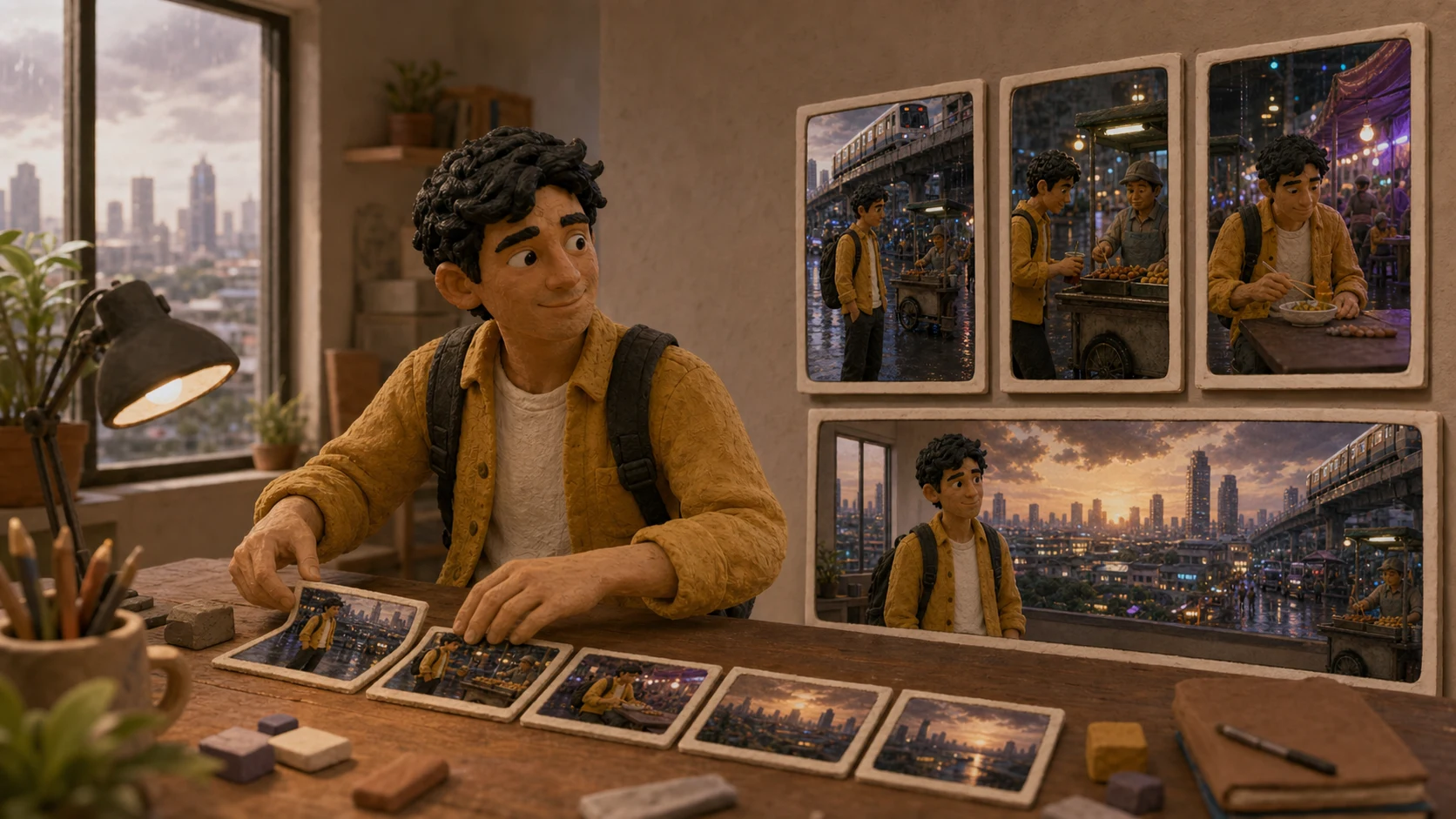
Use short-form to move viewers into a deeper YouTube story
Do not publish random Shorts and hope viewers somehow discover the longer work. Build one story world and release it at two depths. The short-form posts introduce a character and one sharp moment. The longer YouTube episode lets interested viewers spend more time inside the world.
- 1Publish the 60-second Tuesday story as the complete short.
- 2Cut the rain scene into a 12-second standalone hook with its own payoff.
- 3Cut the train-to-motorbike commute into a second short built around the surprising detail.
- 4Expand the full day into a three-to-eight-minute 16:9 YouTube episode with more moments, reflection, and a stronger ending.
- 5Attach the full episode as the Related Video on the YouTube Shorts versions.
Every short should still feel complete. Give it a hook, a small payoff, and a final line. On YouTube Shorts, connect the full episode as the Related Video. On Instagram and TikTok, direct interested viewers to the YouTube destination available from the profile. One longer episode can supply a week of short-form posts without forcing the audience to watch the same edit repeatedly.
Build the next five episodes before publishing the first
A series becomes easier when the first concept naturally produces the next five. Keep the same character and world, then change the daily problem. The Bangkok example already contains several continuations:
- The Bangkok habit I finally stopped fighting
- What $5 buys during my ordinary workday
- The rainy-season mistake I made for three months
- The quietest hour in a city that never feels quiet
- The part of working abroad nobody puts in the montage
Planning continuations before publishing protects the series from becoming a one-off experiment. It also makes the first episode more focused because it no longer needs to explain every part of the creator's life. Anything interesting that does not fit can become tomorrow's story.
Final checklist before publishing
- The opening contains a decision, constraint, contradiction, or consequence.
- The viewer can identify the character and setting in the first three seconds.
- The episode has one problem rather than a loose collection of activities.
- Every scene moves time, place, or tension forward.
- The character's face, hair, outfit, colors, and important prop remain recognizable.
- The narration sounds conversational at normal speed.
- Captions remain readable without covering the character's face.
- Music supports the world without competing with speech.
- The final line explains what changed or what the day meant.
- A related second episode is already planned.
- The short-form version has its own payoff and a clear path to the longer YouTube story.
Frequently asked questions
Yes. Use one clear photo as the recurring character reference, then build the story through first-person narration and animated scenes. Keep the face, hair, signature outfit, and main colors stable so viewers recognize the same character throughout the episode and across the series.
Ship your first faceless video today.
Pick your niche. Pick your models. We render. From idea to finished short in under 7 minutes — no camera, no editor.
Keep reading
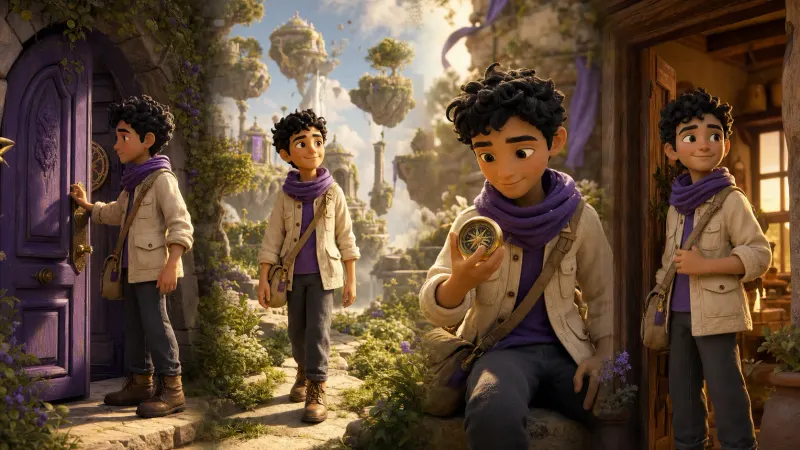
AI Character Video Generator: Create Consistent Character Videos in 2026
Turn one photo and one unusual part of your daily life into a recognizable series. Includes a complete Bangkok character-vlog production kit you can copy field by field.
AI Video Script Generator 2026: Scripts That Hold Retention
Score your script before you generate: anything under a 7 out of 10 will render clean and still get skipped. Here is the hook-to-payoff system that fixes that.
Faceless Reels: The Complete 2026 Instagram Growth Playbook
Trial-testing hooks before you publish takes a faceless Reels account's hit rate from 18% to 64% — here's the exact niche, character, and autopublish setup behind that number.